
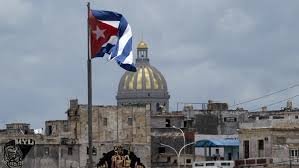
A Historic Turning Point for the Cuban Economy
For the first time in over seven decades, Cuba is undergoing a seismic shift in its economic foundation. In a move that signals a departure from the rigid centralized planning established after the 1959 revolution, the Cuban National Assembly has unanimously adopted a comprehensive program of 176 economic reform proposals. This strategic pivot aims to rescue an island grappling with a profound financial crisis, chronic shortages, and intensifying geopolitical pressure.
Presented by Prime Minister Manuel Marrero, these measures represent the most significant liberalization of the Cuba economy since the era of Fidel Castro. The goal is clear: transition toward a market-oriented model to ensure the survival of the state while alleviating the hardships faced by millions of citizens.
Breaking the Chains: Empowering the Private Sector
The heartbeat of these reforms lies in the drastic expansion of the private sector. While the government introduced small and medium-sized enterprises (SMEs or mipymes) in 2021, the new legislation removes previous ceilings to allow for much larger private ventures.
- Scaling Up: Private companies are no longer restricted to a maximum of 100 employees, allowing for the growth of larger industrial and commercial players.
- Diversification: Entrepreneurs can now own multiple businesses and hold shares in other companies, encouraging a more dynamic investment ecosystem.
- Foreign Capital: In a major shift, foreign investors are no longer limited to joint ventures with the state; they can now invest directly into the private sector.
Financial Liberation and Infrastructure Overhaul
To combat hyperinflation and the lack of liquidity, the government is introducing reforms that modernize the financial landscape. For the first time, individuals and private companies can open foreign currency accounts, providing a vital lifeline for those receiving remittances from abroad.
Furthermore, the banking sector is being opened to private investment, and private exchange bureaus will be authorized to operate, reducing the state’s absolute monopoly over currency flow. According to data from the International Monetary Fund (IMF), stabilizing the macroeconomic environment is crucial for Cuba to avoid total collapse.
Energy and Real Estate: New Frontiers
Energy insecurity has plagued the island with frequent blackouts. To solve this, the government is encouraging private and foreign investment in the purchase and sale of fuel. Additionally, tax incentives are being introduced for renewable energy projects, particularly solar panels, to reduce dependence on volatile oil imports.
In terms of property, the reforms allow Cubans—both on the island and in the diaspora—to purchase buildings on a case-by-case basis, specifically in areas with high tourism potential. This is a stark contrast to the nationalization waves of the 1960s.
The Geopolitical Catalyst: Pressure from Washington
These reforms do not exist in a vacuum. The “maximum pressure” policy from the United States, including a strict oil blockade and the long-standing embargo, has pushed the Cuban economy to the brink. US officials, including Vice President J.D. Vance, have indicated that smarter economic decisions on the island could lead to improved bilateral relations.
President Miguel Diaz-Canel has framed these changes not as an abandonment of ideology, but as a necessary correction. “These are transformations to correct errors, but always to defend socialism,” he stated, highlighting the paradox of attempting to save a socialist state through market capitalism.
Conclusion: A Risky but Necessary Gamble
Cuba is betting on the private sector to do what the state could not: provide food, electricity, and stability. While the timeline for implementation remains vague, the scale of these 176 proposals suggests that the economy of Cuba will look fundamentally different in the coming years. Whether this “market socialism” can thrive under the weight of US sanctions and internal instability remains the defining question for the Caribbean nation.



