
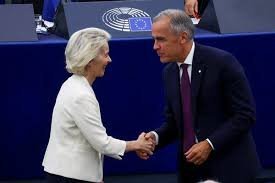
Canada and the EU: A Powerhouse Partnership for the Modern Era
In an increasingly fragmented global landscape, the relationship between Canada and the European Union (EU) stands as a beacon of stability, shared values, and economic ambition. From strategic trade agreements to diplomatic cooperation on climate change, the bond between these two entities is more than just political—it is a blueprint for international success.
The Engine of Growth: Understanding CETA
At the heart of the Canada-EU relationship is the Comprehensive Economic and Trade Agreement (CETA). This landmark deal has fundamentally transformed how businesses operate across the Atlantic by removing the vast majority of tariffs and reducing non-tariff barriers.
For entrepreneurs and corporations, CETA offers several critical advantages:
- n
- Market Access: Elimination of customs duties on 98% of goods, making exports more competitive.
- Service Liberalization: Easier movement of professionals and service providers between the two regions.
- Public Procurement: Canadian companies now have better access to government contracts in EU member states, and vice versa.
n
n
n
To learn more about the specific legal frameworks of this agreement, you can visit the official European Commission trade page.
Beyond Trade: A Shared Diplomatic Vision
While the economic benefits are undeniable, the Canada-EU synergy extends far beyond balance sheets. Both parties share a deep commitment to democratic governance, human rights, and the rule of law. This alignment allows them to act as a unified front in global forums like the G7 and G20.
Collaborating on Global Challenges
One of the most vital areas of cooperation is the fight against climate change. Both Canada and the EU are committed to the Paris Agreement, working together to transition toward green energy and sustainable industrial practices. This collaboration ensures that the transition to a low-carbon economy is both equitable and efficient.
The Future of Canada-EU Relations
Looking ahead, the partnership is expected to evolve toward deeper integration in the tech sector and critical mineral supply chains. As the world seeks to diversify its sources of raw materials for batteries and semiconductors, Canada’s rich mineral resources and the EU’s technological prowess create a natural and necessary alliance.
Key focus areas for the coming decade include:
- Digital Trade: Establishing common standards for data privacy and AI ethics.
- Energy Security: Expanding cooperation in hydrogen energy and LNG exports.
- Academic Exchange: Strengthening research partnerships between universities in Canada and Europe.
n
n
Conclusion
The relationship between Canada and the EU is a testament to how diverse economies can thrive through cooperation. By leveraging CETA and maintaining a shared diplomatic vision, both regions are not only securing their own prosperity but are also contributing to a more stable and sustainable global order.



