
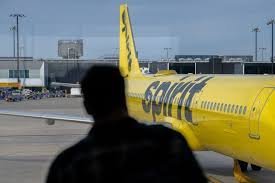
Can a TikTok Trend Save Spirit Airlines? Inside the Viral Crowdfunding Campaign
In a world where the aviation industry is dominated by a few giants, a surprising movement is emerging from the most unlikely of places: TikTok. As Spirit Airlines faces a devastating bankruptcy and its iconic yellow planes are being repossessed, a grassroots movement is attempting the unthinkable—buying the airline back for the people.
The Viral Pitch: “Let’s Buy Spirit”
The spark ignited when Hunter Peterson, a 22-year-old voice actor, posted a compelling pitch on TikTok. His premise was simple yet ambitious: if just 20% of the 250 million adults in the U.S. contributed between $30 and $40, there would be enough capital to rescue the ultra-budget carrier.
The momentum was instantaneous. Peterson launched letsbuyspirit.com, a site that quickly crashed due to overwhelming traffic. By Tuesday morning, the campaign claimed $132 million in non-binding pledges from over 156,000 people, aiming for a massive target of $1.75 billion.
The “People’s Airline” Vision
The campaign frames the takeover as a populist rebellion against corporate greed. The site argues that instead of letting private equity firms pick apart the wreckage, the passengers and workers should own the company. Peterson draws inspiration from unique ownership models, such as:
- n
- The Green Bay Packers: The only publicly owned franchise in major U.S. sports.
- WinCo Foods: An employee-owned success story.
The “Spirit Effect”: Why This Matters for Your Wallet
While the Spirit Airlines crowdfunding campaign might seem like a long shot, it taps into a deep-seated frustration with modern air travel. Spirit was often the punchline of jokes for its non-reclining seats and strict fee structures, but it played a crucial role in the economy: The Spirit Effect.
Economists and the U.S. Department of Transportation have documented that the mere presence of an ultra-low-cost carrier (ULCC) on a route forces other airlines to lower their prices. When Spirit flies, everyone saves money.
Reality Check: Can it Actually Work?
Despite the enthusiasm, the path to ownership is steep. Legal experts and financial analysts point out several hurdles:
- Non-binding Pledges: A “pledge” is not the same as a cash payment in a bankruptcy court.
- Complexity of Assets: Spirit currently lacks the cash to even host an organized auction of its engines and aircraft.
- Ownership Structure: Unlike the Packers (which is grandfathered into an old rule), creating a new community-owned airline in today’s regulatory environment is nearly unprecedented.
The Bigger Picture: Airline Consolidation
The disappearance of Spirit is part of a larger, troubling trend of consolidation. With the four largest U.S. carriers controlling roughly 80% of domestic capacity, consumers are left with fewer choices and higher fares. The merger waves—such as Northwest into Delta and Continental into United—have steadily eroded competition.
Whether the spirit airlines crowdfunding campaign succeeds or fails, it serves as a loud wake-up call. It proves that passengers aren’t just looking for cheap tickets; they are looking for a fair and competitive sky.
What do you think? Would you chip in $45 to save the “People’s Champion” of airlines? Let us know in the comments!



