
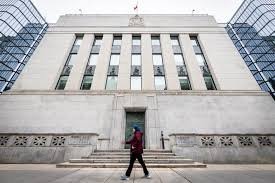
Navigating Uncertainty: The Bank of Canada’s Current Strategy
The Bank of Canada (Banque du Canada) is currently walking a financial tightrope. While the central bank has decided to maintain its policy interest rate at 2.25%, the atmosphere is far from calm. Governor Tiff Macklem has signaled a cautious approach, warning that the risks of rising inflation are increasing, and the bank stands ready to hike rates “if necessary” to keep the economy on track.
The primary goal remains clear: bringing inflation back down to the target of 2%. However, with current inflation sitting at 3%, the path to stability is complicated by global volatility and shifting trade dynamics.
The Shadow of the US Trade War
One of the most significant pressures on the Canadian economy is the intensifying trade friction with the United States. The introduction of new tariffs has injected a layer of uncertainty into growth forecasts. Governor Macklem has been transparent about the risks, noting that a full-scale trade war could potentially push the Canadian economy toward a recession.
Despite these fears, there is a silver lining. The Gross Domestic Product (GDP) saw a rebound in the second quarter, with a 3.3% increase in the third quarter. While Macklem admits this bounce could be temporary, it provides a critical buffer for Canada to withstand new tariff shocks.
Key Economic Pressure Points:
- n
- Energy Costs: Oil prices have surged past $90 USD per barrel, significantly higher than the Bank of Canada’s forecast of $75 USD, risking persistent inflation.
- Export Vulnerability: While targeted products represent about 5% of exports to the US, the impact on specific sectors remains severe.
- Government Intervention: Federal aid programs are expected to mitigate some of the damage caused by US tariffs.
Diversification: The CETA Safety Net
As relations with the US become more volatile, Canada is increasingly looking toward its partners in Europe. Ten years after the signing of the Comprehensive Economic and Trade Agreement (CETA), transatlantic trade is thriving. This diversification serves as a vital “lifeboat,” reducing Canada’s over-reliance on a single trading partner and providing a more stable economic foundation.
For more detailed data on national growth and trade figures, you can visit the official Statistics Canada portal.
What Lies Ahead? The October 28 Decision
Economists are divided on the next move. While some believe that a weakening of consumer spending and business investment could lead to rate cuts, others—including analysts from National Bank—suggest that the probability of a rate hike has increased due to inflation risks.
The next pivotal moment will be October 28, when the Bank of Canada will announce its next interest rate decision along with an updated economic forecast.



