
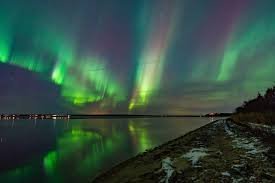
Celestial Magic: Will the Northern Lights Light Up the Canadian Sky Tonight?
Get your cameras ready and keep an eye on the horizon! A surge of solar energy is heading our way, potentially painting the Canadian night sky with the ethereal glow of the Northern Lights (Aurora Borealis). If you’ve been waiting for a sign to head outdoors, this might be it.
The Science Behind the Glow: What’s Happening with the Sun?
This cosmic display isn’t random. According to data from NASA’s Solar Dynamics Observatory, a massive “coronal hole” has opened up in the Sun’s atmosphere. Think of it as a giant magnetic canyon that allows a high-speed stream of solar wind to escape and blast directly toward Earth.
As this coronal hole high-speed stream (CH HSS) sweeps past our planet, it brings along a co-rotating interaction region (CIR)—a dense pocket of high-energy particles. When these particles collide with Earth’s magnetic field, they trigger geomagnetic storms, which are the primary drivers of the breathtaking aurora displays we see from the ground.
When and Where to Watch in Canada
The NOAA Space Weather Prediction Center is forecasting a potential G1 (minor) geomagnetic storm. Here is the breakdown of when and where you should look:
- Peak Timing: The window of opportunity is expected from 11 p.m. Tuesday through 5 a.m. Wednesday (EDT).
- Best Locations: Historically, G1 storms favour Western Canada due to the higher latitudes. Residents in the Yukon, Northwest Territories, and Northern Alberta or BC have the highest probability of a clear view.
- Eastern Canada: While the “aurora oval” typically stays further north of the Windsor-Montreal corridor, don’t lose hope!
The Wildcard: The Power of Substorms
Even if you are located in a region where the odds seem low, there is a phenomenon known as a substorm. Unlike the average activity of a geomagnetic storm, a substorm is a sudden, intense burst of energy that can make the auroras brighter and push them significantly further south.
This means that regardless of your province, a lucky glance toward the northern horizon could reward you with a stunning glimpse of the Aurora Borealis.
Pro Tips for the Best Viewing Experience
To maximize your chances of catching the lights, follow these simple steps:
- Check the Clouds: Clear skies are essential. Use your local weather app to ensure no cloud cover is blocking your view.
- Escape City Lights: Drive away from urban light pollution to a dark spot for maximum contrast.
- Look North: The aurora typically starts as a glow on the northern horizon before dancing overhead.
- Be Patient: Auroras can fluctuate in brightness; some peaks last only a few minutes, while others linger.
Whether you are a seasoned stargazer or a first-timer, the Northern Lights are a reminder of the incredible connection between our planet and the sun. Happy hunting!



