
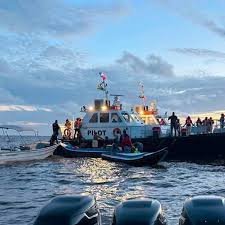
MV Barima: Navigating the Future of Global Maritime Logistics
In the complex world of international trade, the efficiency of the global supply chain depends on the giants of the ocean. Among these essential vessels, the MV Barima stands as a testament to the scale and precision required to move goods across continents. But what exactly makes vessels like the MV Barima critical to the modern economy?
Understanding the Impact of MV Barima on Trade
The maritime industry is the backbone of global commerce, responsible for transporting the vast majority of the world’s trade. The MV Barima operates within this high-stakes environment, ensuring that raw materials and finished products reach their destinations on time.
Whether it is transporting bulk commodities or specialized cargo, the operational efficiency of such a vessel directly influences market prices and product availability for consumers worldwide.
Key Features of Modern Cargo Vessels
To maintain competitiveness in today’s market, ships like the MV Barima incorporate advanced technology to optimize their journeys. Some of the most critical aspects include:
- n
- Fuel Efficiency: Implementation of eco-friendly propulsion systems to reduce carbon footprints.
- Advanced Navigation: Utilizing satellite-based systems for safer and faster routing.
- Cargo Optimization: Strategic loading patterns to maximize space and ensure vessel stability.
- Real-time Tracking: Integration with AIS (Automatic Identification System) for precise monitoring.
The Role of Maritime Logistics in the Digital Age
The shift toward Digital Shipping has transformed how we view vessels. Today, tracking the MV Barima is not just about knowing its location, but about predicting arrival times using Big Data and AI. This transparency allows businesses to manage their inventories with just-in-time (JIT) precision.
For those interested in monitoring vessel movements and understanding global shipping lanes, platforms like MarineTraffic provide invaluable real-time data that enhances logistical planning.
Sustainability and the Future of the Seas
As the International Maritime Organization (IMO) pushes for stricter emission regulations, the operation of vessels like the MV Barima is evolving. The industry is moving toward “Green Shipping,” focusing on alternative fuels such as ammonia, hydrogen, and LNG to protect our oceans.
Conclusion
The MV Barima is more than just a ship; it is a vital link in the chain that connects producers to consumers. As technology and sustainability converge, the maritime sector will continue to evolve, ensuring that global trade remains robust, efficient, and environmentally conscious.



