
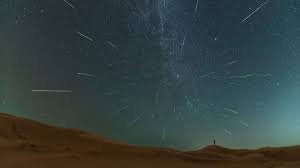
Perseid Meteor Shower 2026: A Rare Cosmic Duo with a Total Solar Eclipse
Get ready to look up! One of the most anticipated celestial events of the year is returning. The Perseid meteor shower is officially active, promising a spectacular display of shooting stars and brilliant fireballs as Earth passes through the debris trail left by the icy comet Swift-Tuttle.
But 2026 isn’t just any year for stargazers. In a rare and dramatic cosmic coincidence, the peak of the Perseids aligns perfectly with a total solar eclipse on August 12-13, creating a viewing experience that is truly once-in-a-lifetime.
When is the Best Time to See the Perseids?
While the shower is active for several weeks, the real magic happens during the peak. For 2026, mark your calendars for the night of August 12 and the early morning of August 13.
Unlike previous years where moonlight might have washed out the show, the 2026 peak coincides with a new moon. This means the skies will be ink-black, providing the perfect canvas for the meteors to shine. According to the American Meteor Society, observers can expect to see up to 100 shooting stars per hour during this window.
The Eclipse Twist
Imagine this: the moon perfectly masking the sun during the total solar eclipse, triggering a false twilight. If you are located within the path of totality, there is a slim but thrilling chance of spotting a Perseid fireball streaking across the sky during the eclipse’s climax. While the odds are low, the possibility makes this event an astronomical goldmine.
How to Find the Perseids: A Beginner’s Guide
You don’t need expensive equipment to enjoy the show—just your eyes and a bit of patience. Follow these steps for the best experience:
- n
- Find a Dark Spot: Get as far away from city lights and light pollution as possible.
- Let Your Eyes Adjust: Give your vision at least 20 minutes to adapt to the darkness; avoid looking at your phone screen!
- Locate the Radiant: Look toward the northwestern horizon to find the constellation Perseus. The meteors appear to originate from a point near the star Eta Persei.
- Look Slightly Away: While the “radiant” is the source, the longest and most vivid trails are often seen about 40 degrees away from the constellation.
What Makes the Perseids Special?
The Perseids are world-famous not just for their frequency, but for their intensity. They are known for producing vivid green fireballs—larger chunks of comet debris that collide with Earth’s atmosphere at staggering speeds of up to 37 miles per second (59 kilometers per second), momentarily illuminating the night sky like daylight.
For viewers in the United States, the best viewing window typically begins after 10 p.m., with the highest activity occurring in the predawn hours of August 13, when the radiant reaches its highest point in the sky.
Capturing the Magic: Astrophotography Tips
If you want to document these cosmic streaks, you’ll need a camera capable of long exposures and excellent low-light performance. A full-frame sensor and a wide-angle lens are ideal for capturing the vastness of the Milky Way alongside the meteors.
To learn more about the science of these events, you can explore the latest discoveries at NASA’s official website, which provides detailed data on comet trails and orbital mechanics.
Whether you are a seasoned astronomer or just someone who loves a beautiful night sky, the 2026 Perseids are not to be missed. Grab a blanket, find a dark field, and prepare to be amazed by the universe!



