Heartbreak in Kansas City: The VAR Decision That Changed Everything
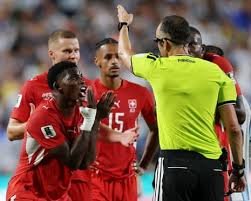
The World Cup quarter-final between Argentina and Switzerland was more than just a battle of tactical prowess; it became a flashpoint for one of the most controversial applications of technology in modern football. In a match that swung from a deadlock to high drama, the VAR (Video Assistant Referee) played a pivotal role, leaving the Swiss squad devastated and their star forward, Breel Embolo, in tears.
While Argentina eventually triumphed with two goals in extra time, the conversation following the match hasn’t been about the goals, but about a specific, novel rule that shifted the momentum of the game.
The Moment of Chaos: Paredes vs. Embolo
The game was reaching a boiling point. Switzerland had just clawed back into the match with a 67th-minute equalizer from Dan Ndoye. However, just five minutes later, the atmosphere shifted. Argentina’s Leandro Paredes challenged Breel Embolo in a play that initially seemed like a foul by the Argentinian.
Referee João Pinheiro initially issued a yellow card to Paredes. For the Swiss players and coach Murat Yakin, it seemed like a standard call. But then came the intervention from the VAR booth.
Understanding the ‘Mistaken Identity’ Twist
In a surprising turn of events, the VAR recommended a review based on “mistaken identity.” Traditionally, this rule was used when a referee booked the wrong player for a foul. However, under new guidelines adopted by the International Football Association Board (IFAB) for the 2026 cycle, the definition has expanded.
The new interpretation allows VAR to intervene if:
- n
- A player is booked for a foul, but the review shows the opposing player actually simulated the contact.
- The original caution is rescinded from the defender and issued to the attacker for simulation.
n
n
In this instance, the footage suggested Embolo began his fall before Paredes ever made contact. Consequently, the yellow card was stripped from Paredes and given to Embolo. Since Embolo had already been cautioned in the first half, he was shown a second yellow card and sent off, leaving Switzerland to fight a man down for 67 grueling minutes.
“A Disaster for Football”: The Aftermath
The reaction from the Swiss camp was one of utter disbelief. Coach Murat Yakin did not hold back his frustration, stating that the rule effectively “destroyed the game.” The emotional toll was visible as Embolo was escorted from the pitch in tears, shattered by the decision.
This wasn’t the first time this specific VAR application appeared in the tournament—a similar incident occurred during the USA vs. Paraguay match—but the stakes in a quarter-final are infinitely higher. With a depleted defense and fading energy, Switzerland finally succumbed to Argentina’s pressure in extra time, conceding twice in a nine-minute window.
The Bigger Picture: Technology vs. Tradition
This incident reignites the global debate on whether VAR is enhancing fairness or stripping the soul from the sport. While FIFA maintains that these rules ensure the correct decision is reached, many argue that the “mistaken identity” expansion creates unnecessary complexity in an already tense environment.
For Switzerland, it was a cruel exit. For the footballing world, it is a stark reminder that in the era of high-definition reviews, the laws of the game can change the destiny of a nation in a matter of seconds.