
The High Stakes of Border Enforcement: An Analysis of Tom Homan’s Latest Insights
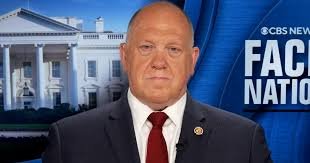
In a recent high-tension interview on Face the Nation with Margaret Brennan, Tom Homan, the Trump administration’s border czar, addressed some of the most contentious issues surrounding U.S. immigration enforcement. From fatal encounters during vehicle stops to the bureaucratic battle over body cameras, Homan provided a candid look at the challenges facing U.S. Immigration and Customs Enforcement (ICE).
The Controversy of Unmarked Vehicles and Compliance
One of the most critical points of discussion centered on a series of fatal shootings involving immigrants in Maine and Houston. The core of the debate lies in the use of unmarked vehicles during enforcement operations. While critics argue that the lack of clear markings leads to confusion—and in some cases, fear of robbery—Homan maintains a firm stance on law enforcement protocols.
Homan emphasizes that while vehicles may be unmarked to help locate individuals who are actively evading capture, they are equipped with emergency lights and sirens. His message to the public is clear and uncompromising: compliance is key.
“They would be alive today if they simply complied with a vehicle stop by federal law enforcement. Just comply.” — Tom Homan
The Battle for Body Cameras: Funding and Accountability
The absence of body camera footage in several recent incidents has sparked a debate over transparency. Homan argued that the delay in deploying these devices nationwide is not a lack of will, but a result of political gridlock and government shutdowns.
According to Homan, the deployment of body cameras is essential for two primary reasons:
- n
- Transparency: Allowing the American public to see exactly what an officer sees and hears during a high-stress encounter.
- Exoneration: Homan asserts that data shows body cameras often exonerate agents by providing objective evidence that protocols were followed.
He noted that while funding for the hardware was partially secured, the infrastructure for data storage and the management of Freedom of Information Act (FOIA) requests requires significant, sustained investment from the Department of Homeland Security (DHS).
Rhetoric and the Challenge of Sanctuary Cities
Homan also touched upon the sociological aspect of enforcement, suggesting that political rhetoric in sanctuary cities and from certain members of Congress may be emboldening individuals to resist ICE agents. He argued that claiming ICE is not a “real law enforcement agency” creates a dangerous environment for both the officers and the people they are attempting to apprehend.
Looking Ahead: Voter Rolls and Election Security
When questioned about the identification of non-citizens on voter rolls in states like California and Pennsylvania, Homan deferred the specifics to the DHS and Markwayne Mullin. This highlights the complex coordination required between the White House border czar and the operational arms of the DHS as the U.S. approaches critical election cycles.
Conclusion: The dialogue between Margaret Brennan and Tom Homan underscores the thin line between aggressive enforcement and public safety. As the administration pushes for more resources and stricter compliance, the debate over accountability and the use of technology like body cameras remains at the forefront of the national conversation on immigration.



