
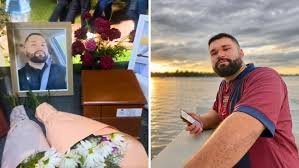
The Mark of Identity: A Mother’s Heartbreak Amidst Ruins
For Oswadeliz Núñez, a simple tattoo was once a point of contention between her and her son, Daniel. When Daniel decided to get inked at 24, it sparked arguments. However, years later, that same tattoo became the only bridge between a grieving mother and her son’s remains after the catastrophic earthquake now etched into the memory of Venezuela.
Daniel’s journey home was not the reunion his family had hoped for. After being deported from the United States, he touched down in Venezuela on the very day disaster struck. What was meant to be a fresh start turned into a nightmare in a matter of minutes.
A Fatal Homecoming
Upon arriving at the Simón Bolívar International Airport from Miami, Daniel and 145 other deportees were placed under the care of the Venezuelan intelligence service (SEBIN). They were housed in a hotel in Macuto, La Guaira, while administrative paperwork was finalized.
In his final phone call to his mother, Daniel sounded hopeful. He spoke of medical exams, meals provided, and the anticipation of a seven-hour trip to reunite with his mother in El Tigre the following day. But the reunion never happened. Just 40 minutes after that call, the earth shook violently, and the hotel collapsed, trapping Daniel and potentially a dozen other deportees beneath the rubble.
The Desperate Search for Answers
While the nation grappled with thousands of casualties, Oswadeliz refused to give up. Facing a wall of silence from official authorities, she traveled to La Guaira with a small team of relatives and friends. Their search was exhaustive and grueling:
- n
- Door-to-door searches: Climbing ten-story hospitals room by room.
- Sleepless nights: Resting only two or three hours at a time to continue the hunt.
- Navigating chaos: Searching through emergency morgues filled with unidentified victims.
When she finally found the body corresponding to Daniel’s number, the image was unrecognizable. His face had been crushed by the debris. It was only when her nephew cleaned Daniel’s left arm that the tattoo appeared—the same one she had once argued about. “Now I thank God he got it,” she recounted, as it was the only way to confirm his identity.
The Bureaucracy of Grief
Even in death, the struggle continued. Despite promises of free cremation, the bureaucratic delays meant a wait of up to 30 days. Unable to endure the agony and the cost of staying in La Guaira, Oswadeliz paid $680 to a private crematorium to expedite the process. She returned home not with her son, but with his ashes.
A Question of Justice and Human Rights
Daniel’s case raises serious questions about the deportation process. He had entered the US in 2022 seeking asylum. Despite having no criminal record—only minor traffic violations—he was detained by U.S. Immigration and Customs Enforcement (ICE). His mother claims he was pressured psychologically to sign self-deportation papers.
Now, Oswadeliz, a lawyer by profession, is turning her grief into a fight for justice. She is calling for:
- Greater Transparency: Demanding that the Venezuelan government provide clear information to families of the missing.
- Humane Protocols: Ensuring that deportees without criminal records are not treated as “sacks of potatoes” but as human beings with rights.
- Accountability: Seeking justice for the lack of safety and efficiency in the repatriation process.
As the world looks at the aftermath of the earthquake now, the story of Daniel Núñez serves as a poignant reminder that behind every statistic is a human life and a family left searching for closure.



