
A Climate Crisis Igniting Political Tensions
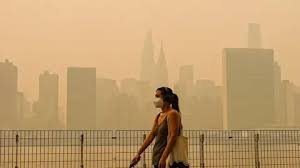
What began as a natural disaster has rapidly evolved into a diplomatic showdown. Massive Canadian wildfires have sent plumes of hazardous smoke billowing across the border, shrouding major US cities in a thick, grey haze and triggering a wave of political volatility between the two closest neighbours in the world.
As of recently, the Canadian Wildland Fire Information System reported approximately 888 active fires, with a significant portion burning out of control. The environmental toll is staggering, with nearly 3 million hectares of land already destroyed, primarily in Ontario and British Columbia.
Tariffs and Tensions: The Trump Response
The environmental crisis has taken a sharp political turn. US President Donald Trump has threatened to impose new tariffs on Canada, accusing the nation of “willful negligence” regarding forest management. Trump claims that the US is being “unnecessarily invaded” by polluted air, suggesting that Canada has failed to properly maintain its forests and brush.
This rhetoric has emboldened some US lawmakers to demand direct American involvement in cross-border firefighting, claiming that “American lungs are paying the price for Canadian inaction.” The tension has escalated further with some Republican figures suggesting Canada should simply become the 51st US state—a comment that has sparked outrage and boycott calls across Canada.
The Canadian Perspective: A Shared Global Burden
Canadian officials have pushed back strongly against the narrative of negligence. Ontario Premier Doug Ford has urged the US to provide support and resources rather than criticism, reminding the US of Canada’s history of assisting American states during California wildfires and hurricanes in North Carolina.
Key Canadian Counter-Arguments:
- Financial Investment: Canada has invested roughly C$12 billion into forest sustainability and fire prevention.
- Mutual Aid: A reciprocal firefighting agreement has existed since 1982, ensuring bilateral cooperation during disasters.
- Climate Reality: Prime Minister Mark Carney has emphasized that climate change is a global responsibility that transcends national borders.
The Science Behind the Smoke
While political fingers are being pointed, scientists warn that the situation is far more complex. According to experts from the University of Toronto and the University of Waterloo, weather patterns and climate change are the primary drivers of these extreme seasons.
Sustained high temperatures and below-average rainfall in northern Ontario have created a tinderbox effect. Moreover, once smoke enters the atmosphere, it follows wind currents regardless of political boundaries. Experts note that the scale of Canada’s remote forests makes total containment nearly impossible, regardless of the management strategies in place.
Human Cost and Urban Impact
Beyond the political theatre, the human impact is devastating. In northern Ontario, the Namaygoosisagagun First Nation has seen its community “burnt to ashes,” forcing residents to self-evacuate via small boats as fire levelled their homes.
In urban centres, the air quality has reached dangerous levels. Data from IQAir recently ranked Detroit as having some of the worst air quality globally, with Chicago, Washington DC, and New York following closely. This has led to:
- Cancellation of outdoor events and summer camps.
- Flight delays due to low visibility at major airports.
- Health alerts urging citizens to wear masks and remain indoors.
As the world watches the intersection of environmental collapse and geopolitical friction, the Canadian wildfires serve as a stark reminder that in the face of a changing climate, no border can offer protection from the consequences of a warming planet.



