
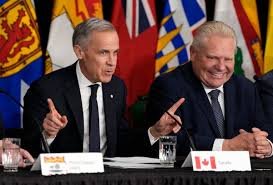
Doug Ford and Justin Trudeau: A Shifting Political Landscape
Recent interactions between Prime Minister Justin Trudeau and Ontario Premier Doug Ford have sparked speculation about a possible early federal election. According to three sources familiar with the discussions, the two leaders have casually discussed the importance of a strong majority mandate, particularly in light of uncertain economic times. Premier Ford, known for forging a close relationship with the Liberal Leader, reportedly emphasized the need for economic stability.
One source indicated that Mr. Ford suggested an election could provide an opportunity to secure a clear majority. However, it’s crucial to note this isn’t an endorsement of the Liberal party, which currently holds a minority government. Prime Minister Trudeau’s office has consistently stated he is not considering a snap election, reiterating his focus on delivering results for Canadians. (See CBC News for more on the Prime Minister’s stance).
A Developing Relationship
These conversations highlight the increasingly close relationship between the two leaders, despite their differing party affiliations. Mr. Ford is actively advocating for federal policies to support Ontario amidst trade challenges with the U.S., while Mr. Trudeau positions himself as a unifying force against American aggression. This dynamic is particularly significant for Mr. Trudeau, whose party narrowly missed a majority in the last election, struggling to gain traction in key suburban ridings in the Greater Toronto Area and Southern Ontario.
The discussions have occurred both in person and over the phone, including during the First Ministers’ Meeting in Ottawa on January 29th. Sources reveal that Mr. Ford even advised Mr. Trudeau to consider triggering an election. This echoes Mr. Ford’s own strategy of calling an early election in Ontario, citing the need for a mandate to address issues like those with the U.S. President Donald Trump.
Conservative Concerns and Potential Strategies
The federal Conservatives are wary that the Liberals might call an election to capitalize on Mr. Trudeau’s popularity, which currently surpasses that of Conservative Leader Pierre Poilievre in public opinion polls. Polls indicate Mr. Trudeau leads Mr. Poilievre by as much as 29 percentage points as preferred prime minister, with the Liberals holding a lead of 4-9 percentage points in overall support.
Conservative MP Michelle Rempel-Gardner expressed concern over a “manufactured, opportunistic snap election,” arguing that Mr. Trudeau should work with the existing minority Parliament. The party is already preparing for a potential spring election, accelerating candidate nominations and exploring campaign office rentals.
Interestingly, Mr. Poilievre has shown a willingness to cooperate with the Liberal government on certain issues, such as bail reform, potentially complicating the rationale for an early election. The Liberals also face the need to hold two by-elections due to recent resignations, adding another layer to the political calculations.
The Role of Economic and International Factors
Pollster Nik Nanos suggests that the appetite for a snap election stems from political anxieties and the desire for a strong mandate to navigate economic challenges and potential negotiations with the U.S. regarding the United States-Mexico-Canada Agreement (USMCA). The Liberals might seize on statements from U.S. President Trump to justify an election call and seek a clear mandate to respond.
The evolving relationship between Doug Ford and Justin Trudeau, coupled with the broader political landscape, suggests a period of uncertainty and strategic maneuvering in Canadian politics. The possibility of an early election remains a significant factor, with both parties carefully weighing their options and preparing for potential outcomes.



