
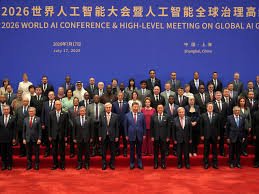
The New AI Order: How China’s WAICO Alliance is Reshaping Artificial Intelligence Regulations
The global race for supremacy in artificial intelligence has shifted from a purely technical competition to a high-stakes geopolitical chess match. While the world has long looked toward Silicon Valley as the epicenter of innovation, Beijing is now positioning itself as the primary architect of the next global AI order.
During a recent high-profile tech summit in Shanghai, Chinese President Xi Jinping sent a clear message: the future of AI should not be a “solo performance” by any single nation. Instead, he advocated for a “symphony of international cooperation,” explicitly challenging the current influence of the United States in the development and oversight of this transformative technology.
What is WAICO and Why Does It Matter?
At the heart of China’s strategic pivot is the newly formed World Artificial Intelligence Cooperation Organisation (WAICO). This inter-governmental coalition, comprising 29 founding nations, is designed to promote international cooperation and establish AI regulations that ensure the technology remains safe and beneficial for humanity.
WAICO is particularly significant because it draws heavily from the Global South. Founding members include key players such as:
- n
- Brazil
- South Africa
- Indonesia
- Malaysia
- Russia
- Pakistan
Analysts suggest that by building this alliance, Beijing is not just exporting infrastructure but is actively crafting the policy frameworks that will likely be proposed at the United Nations, potentially sidelining Western-centric norms.
The Hardware War: Chips, Minerals, and Energy
While the debate over regulations continues, a more visceral battle is being fought over the physical components of artificial intelligence. The “Chip War” between the US and China represents a critical vulnerability for both powers.
Currently, the US maintains an edge in cutting-edge semiconductor design and manufacturing. However, China holds two massive strategic advantages:
- Critical Minerals: China dominates the production of rare earth minerals essential for chip manufacturing.
- Energy Infrastructure: AI requires colossal amounts of power. With an aggressive state-led investment in its energy grid, China already generates more than twice the electricity of the US, providing a sustainable foundation for massive data centres.
These advantages have led to a cycle of retaliation, with Washington imposing strict export controls on high-end chips and Beijing responding by restricting the export of dual-use technologies and critical minerals.
A “People-Centred” Vision for AI Governance
President Xi has emphasized a “people-centred” approach to AI, arguing that the technology must always remain under human control. This vision includes the implementation of:
- Rigorous technological monitoring systems.
- Early warning and emergency response protocols.
- Open-source AI initiatives to prevent “historical injustices” in developing nations.
By framing AI as a tool for equity and safety, China is attempting to attract middle-power and low-income allies who feel left behind by the rapid, profit-driven deployment of AI in the West. As noted by experts at the Carnegie Endowment for International Peace, Beijing is stepping into a leadership vacuum as the US retreats from some global norm-setting processes.
Conclusion: The Future of Global AI
The emergence of WAICO signals a shift in the artificial intelligence landscape. We are moving away from a world where a few tech giants dictate the rules to a fragmented geopolitical environment where AI regulation is a tool of diplomacy and power.
Whether the world moves toward a unified set of safety standards or splits into two distinct “AI blocs” will depend on how these superpowers navigate the tension between national security and global cooperation.



