
The Fatal Collision: What Happened Over the Hudson River?
A breathtaking sightseeing tour turned into a nightmare last year when a helicopter plunged into the Hudson River near New York City. The tragic accident claimed the lives of a family of five and their pilot, leaving a community in shock and aviation experts searching for answers.
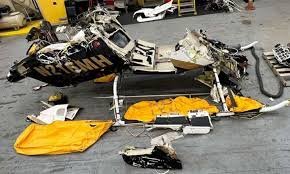
According to investigative reports recently released by the National Transportation Safety Board (NTSB), the Bell 206L-4 aircraft, operated by New York Helicopters, was performing a routine flight. After taking off from lower Manhattan on April 11, 2025, the helicopter circled the Statue of Liberty before heading north. However, during its return south near the New Jersey shoreline, the aircraft suffered a catastrophic structural failure, flipping and spiraling into the water.
The Science of the Crash: Identifying the ‘Snarge’
The cause of the disaster was not mechanical failure, but a collision with nature. The Smithsonian Institution’s specialized feather identification lab analyzed the wreckage to determine exactly what happened. Their findings revealed a grim reality: a mixed-species flock of Brant and Canada Geese impacted the rotor blades and the rear of the aircraft.
Investigators use a term known as “snarge” to describe the organic remains of birds found after aircraft collisions. To provide a definitive answer, the lab utilized:
- n
- DNA analyses of biological fragments.
- Microscopic examinations of diagnostic characters.
- Comparison with preserved bird specimens.
The impact was so severe that a Great Blackbacked Gull was also mangled by flying debris from the helicopter’s tail section, landing on a nearby rooftop along with other wreckage.
A Pattern of Danger: Bird Strikes in Aviation
While the NTSB has not yet issued a final “probable cause,” this incident highlights a growing concern for the Federal Aviation Administration (FAA). The Hudson River has a history of such encounters, most notably the famous “Miracle on the Hudson” in 2009, where Capt. Sully Sullenberger successfully landed an Airbus A320 after Canadian Geese disabled both engines.
The scale of the problem is staggering. Last year alone, the FAA’s wildlife strike database reported over 24,000 incidents of aircraft hitting animals, with more than 1,000 occurring specifically in the New York and New Jersey regions.
Why Are Bird Strikes Increasing?
The FAA suggests that several factors are contributing to the rise in these dangerous encounters:
- Increased Wildlife Populations: Larger flocks in urban flight paths.
- Flight Volume: More aircraft in the sky increasing the probability of collision.
- Aircraft Design: Faster and quieter engines that may not alert birds of an approaching aircraft.
- Better Reporting: More accurate data collection from pilots and airports.
To mitigate these risks, authorities are focusing on habitat management, advanced wildlife movement prediction, and implementing strategies to keep animals away from critical takeoff and landing zones.
The victims of this tragedy included a couple employed by the German technology giant Siemens and their three children. As the aviation industry continues to evolve, the focus remains on preventing such heartbreaking losses through better technology and wildlife management.



