
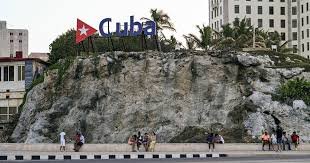
The Pentagon’s Quiet Calculations: Assessing Cuba Military Options
While the world’s attention is fixed on the volatile conflict in the Middle East, a new flashpoint is simmering much closer to the American shoreline. Recent reports indicate that senior Pentagon officials have been quietly evaluating a range of Cuba military options, signaling a shift toward a more assertive posture in the Caribbean.
Among the most striking contingencies is a potential Army-led air assault. Sources reveal that planners have examined operations involving thousands of U.S. soldiers, specifically eyeing the 101st Airborne Division—the only unit currently trained for such a high-risk mission. While these briefings do not necessarily mean an invasion is imminent, they highlight a strategic readiness to act should diplomatic efforts fail completely.
The Geopolitical Tug-of-War: Iran vs. Cuba
The United States currently finds itself in a complex balancing act. With Operation Epic Fury consuming significant resources to dismantle Iran’s ballistic capabilities, the Pentagon faces a logistical dilemma. Shifting the focus toward Cuba would require relocating intelligence assets and aircraft already committed to the Middle East.
This internal friction has also extended to the leadership. Reports suggest tensions between the White House and military commanders over the pace of the war in Iran, creating a backdrop of uncertainty as the administration weighs its options in Havana.
Economic Warfare and the ‘Maximum Pressure’ Strategy
The U.S. strategy toward Cuba isn’t just about military readiness; it’s about economic strangulation. The administration has implemented a “maximum pressure” campaign designed to force a political transition. Key elements of this strategy include:
- n
- Targeting GAESA: Tightening the financial vice around the $18 billion military-controlled conglomerate that funds the Cuban regime.
- State Sponsor of Terrorism: Reinstating this designation to restrict Cuba’s access to international financial markets.
- Visa Restrictions: Targeting overseas medical missions to cut off vital revenue streams.
- Oil Sanctions: Penalizing foreign governments and companies that supply the island with fuel.
Intelligence, Drones, and the Guantanamo Factor
Security concerns have escalated following reports that Cuba has acquired attack drones of unknown origin. This development poses a direct threat to the U.S. Naval base at Guantanamo Bay. The U.S. government has warned that any attempt to threaten the American homeland or its installations would invite a confrontation that the Cuban government simply cannot sustain.
Furthermore, the 2026 annual threat assessment suggests that while Cuba may not be an independent strategic threat, it serves as an “enabling environment” for rivals like Russia, China, and Iran.
The Legal Front: The Indictment of Raul Castro
Beyond the military and economic spheres, the U.S. is utilizing legal warfare. The recent indictment of 95-year-old former leader Raul Castro regarding the 1996 shootdown of U.S. planes has sparked speculation about a potential “snatch and grab” operation, similar to the capture of Nicolás Maduro in Venezuela.
For more information on official U.S. policy regarding sanctions and international relations, you can visit the U.S. Department of State.
Conclusion: A Fragile Balance
The current state of U.S.-Cuba relations is a volatile mix of diplomatic hope and military preparation. While Secretary of State Marco Rubio has expressed a preference for a transition to a technocratic government, the reality on the ground is one of increasing isolation and economic collapse for the Cuban regime. Whether the Pentagon’s military options remain on the drawing board or move into action depends on Havana’s willingness to embrace fundamental reform.



