Rocket Launch Today: SpaceX Hits New Milestones with Starlink 10-45 Mission
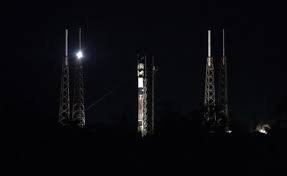
SpaceX Continues Its Orbital Dominance with the Starlink 10-45 Mission
For space enthusiasts tracking every rocket launch today, the latest activity from Cape Canaveral has provided plenty of excitement. SpaceX has successfully executed the Starlink 10-45 mission, further expanding its massive broadband internet constellation in low Earth orbit (LEO).
This mission isn’t just about adding more satellites; it’s a testament to the unprecedented efficiency of modern aerospace engineering. The flight deployed 29 new broadband satellites, adding to a fleet that now exceeds 10,700 spacecraft orbiting our planet.
The Engineering Marvel: Falcon 9 and the Art of Reusability
The star of the show was the Falcon 9 rocket, specifically the first-stage booster with the tail number B1080. This particular booster is a seasoned veteran of the skies, marking its 28th flight. Its impressive resume includes previous missions for the European Space Agency’s Euclid observatory, Axiom Space crew flights, and Northrop Grumman’s NG-21.
Perhaps the most staggering statistic from this mission is the company-wide milestone: SpaceX is pushing toward the 600th cumulative reuse of its Falcon boosters. This level of reusability is what allows SpaceX to maintain such a high frequency of launches compared to traditional space agencies.
Mission Logistics and Weather Challenges
The journey to orbit was not without its tension. While the initial window opened with a 90% to 95% probability of favorable weather, meteorologists had to keep a close eye on thick clouds that could have triggered lightning—a critical risk for any rocket ascent.
- n
- Launch Site: Space Launch Complex 40, Cape Canaveral Space Force Station.
- Trajectory: North-easterly path upon leaving the pad.
- Actual Liftoff: Following schedule adjustments, the rocket successfully soared at 6:17 p.m. EDT.
The Perfect Landing: ‘A Shortfall of Gravitas’
As is tradition with the Falcon 9, the mission didn’t end at deployment. Approximately 8.5 minutes after liftoff, booster B1080 targeted a precise landing on the autonomous droneship ‘A Shortfall of Gravitas’ in the Atlantic Ocean.
If successful, this landing marks the 161st time this specific vessel has recovered a booster and the 638th booster landing for SpaceX overall. This relentless cycle of launch and recovery is fundamentally changing the economics of space access.
Why This Matters for the Future of Connectivity
With the 30th orbital launch from Florida in 2024 already completed, the scale of the low Earth orbit (LEO) ecosystem is growing rapidly. The Starlink constellation aims to bridge the digital divide, providing high-speed internet to the most remote corners of the globe.
As SpaceX continues to refine its launch cadence and booster reliability, the dream of frequent, affordable interplanetary travel moves one step closer to reality.
📰 You May Also Like