
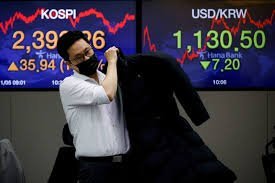
Understanding the KOSPI: Your Gateway to the South Korean Economy
For investors looking to diversify their portfolios beyond North American markets, the KOSPI (Korea Composite Stock Price Index) represents one of the most dynamic opportunities in Asia. As the primary benchmark for the South Korean stock market, the KOSPI tracks the performance of all common stocks traded on the Korea Exchange.
But what exactly makes the KOSPI a critical indicator for global investors, and how can you leverage its trends for your financial growth?
What is the KOSPI Index?
The KOSPI is a market-capitalization-weighted index, meaning larger companies have a more significant impact on the index’s movement. It serves as a barometer for the economic health of South Korea, one of the world’s leading economies in terms of technology and manufacturing.
Unlike smaller indices, the KOSPI provides a broad overview of various sectors, though it is heavily influenced by the technology and semiconductor industries.
Key Drivers of the KOSPI Performance
Several factors contribute to the volatility and growth of the KOSPI. If you are tracking this index, keep a close eye on the following:
- Tech Giants: Companies like Samsung Electronics and SK Hynix dominate the index. Their quarterly earnings often dictate the direction of the entire market.
- Global Trade Demand: Since South Korea is an export-oriented economy, global demand for electronics, automobiles, and ships directly impacts stock prices.
- Geopolitical Stability: Relations between North and South Korea, as well as trade tensions between the US and China, can create short-term volatility.
- Monetary Policy: Interest rate decisions by the Bank of Korea and the US Federal Reserve significantly influence foreign capital inflows.
Why Invest in the South Korean Market?
Investing in the KOSPI allows you to gain exposure to some of the most innovative companies on the planet. South Korea is a global leader in 5G technology, robotics, and EV battery production. For a Canadian investor, this offers a strategic hedge against a purely domestic portfolio.
Tips for Navigating the KOSPI for Beginners
Entering a foreign market can be daunting. Here are a few strategies to get started safely:
- Utilize ETFs: Instead of picking individual stocks, consider Exchange Traded Funds (ETFs) that track the KOSPI. This reduces risk through diversification.
- Monitor Currency Fluctuations: Remember that you are investing in Korean Won (KRW). Changes in the exchange rate can affect your total return.
- Follow Reliable Data: Use high-authority financial platforms like Bloomberg or Yahoo Finance to track real-time movements.
Final Thoughts
The KOSPI is more than just a number; it is a reflection of South Korea’s resilience and technological ambition. Whether you are a seasoned trader or a novice investor, understanding the nuances of this index is essential for anyone serious about global market expansion.



