
Beyond the Rubble: How Children in Venezuela are Healing After a Devastating Earthquake
For ten-year-old Maria, the world stopped the moment the ground shook. The powerful twin earthquakes that ripped through the coastal town of Caraballeda, Venezuela, didn’t just destroy buildings; they shattered her world, taking her mother and leaving her with a void that no amount of time can easily fill.
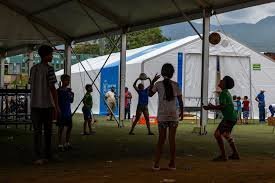
Maria and her 13-year-old brother, Damian, now find refuge with their aunt, Mercedes Osul. While Maria repeatedly speaks of the moment she lost her mother, Damian has chosen a different path to survival: silence. For Damian, the trauma of the earthquake is processed not through words, but through the rhythmic kick of a soccer ball in an improvised field within a temporary shelter.
The Silent Struggle: How Children Cope with Disaster
When a natural disaster strikes, the emotional toll on children varies wildly. While adults focus on the logistics of rebuilding, children navigate a complex landscape of grief, fear, and uncertainty. As Aunt Mercedes observed, Maria seeks comfort in the simple sweetness of candy, while Damian finds solace in sports. These are innocent, childlike coping mechanisms for a tragedy that would overwhelm most adults.
Psychologists emphasize that there is no “correct” way to process such a traumatic experience. This is where specialized intervention becomes critical to prevent long-term psychological scarring.
The Power of Play: Child-Friendly Spaces
To combat the lingering effects of the disaster, organizations like UNICEF and World Vision have implemented Child-Friendly Spaces. These are not just play areas; they are therapeutic environments where psychologists and social workers use guided play and group dynamics to help children regain a sense of security.
Why Play is Essential for Recovery:
- Emotional Release: Play allows children to express emotions they cannot put into words.
- Social Reconnection: Interacting with peers who have shared similar traumas reduces feelings of isolation.
- Restoring Routine: Establishing a safe space for arts, crafts, and sports helps rebuild a sense of normalcy.
- Stress Reduction: Physical activity, like soccer, serves as a vital outlet for venting frustration and anxiety.
The Scale of the Crisis in Venezuela
The impact of the earthquake extends far beyond the immediate destruction of homes. UNICEF estimates that approximately 650,000 people require urgent assistance, including roughly 234,000 children. This figure includes not only those who lost family members but also those affected by the collapse of essential services such as clean drinking water and medical care.
Furthermore, the challenge of security within temporary shelters remains a pressing concern. Aid groups are working tirelessly to ensure these spaces remain sanctuaries, protecting vulnerable children from those seeking to exploit the chaos of the crisis.
Looking Toward the Future: Education and Stability
Recovery is a long journey that involves more than just psychological support; it requires the restoration of a future. A primary goal for the Venezuelan government and international agencies is returning children to school. Education is the cornerstone of stability, providing the structure and hope needed to move forward.
For children separated from their parents, the legal path is complex. Experts in family law, such as Jeslia Vergara, note that the priority is finding extended family members to avoid institutionalization, ensuring that adoption remains a last resort only after exhaustive searches for kinship care.
Conclusion: The Long Road Home
For Mercedes Osul and the four children now under her care, the psychological support and food provided by shelters are lifesavers. However, the ultimate healing comes from a place of permanence. As Osul puts it, “A house. Everything else comes afterward.”
Until then, children like Maria and Damian will continue to lean on the small comforts—a piece of candy, a soccer game—as they slowly piece together their lives after the earthquake.



