Wuthering Heights: A Bold Reimagining or a Romantic Disappointment?
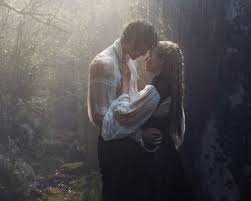
Emerald Fennell’s adaptation of Emily Brontë’s classic, Wuthering Heights, is proving to be a divisive force. While visually striking, the film has been criticized for prioritizing style over substance, resulting in an emotionally hollow experience that, despite featuring stars like Margot Robbie and Jacob Elordi, feels strangely detached from the source material’s raw power. The film, which presents its title with ironic inverted commas, leans heavily into a campy aesthetic, transforming the windswept Yorkshire moors into a backdrop for a relentless fashion shoot.
A Visual Spectacle, But at What Cost?
Fennell’s Wuthering Heights isn’t afraid to be provocative. Scenes of Cathy (Margot Robbie) exploring her sexuality are presented with a frankness that, while potentially engaging, feels somewhat disconnected from the deeper emotional currents of the novel. The film’s visual flair, with ripped bodices and hints of BDSM, aims for a saucy edge, but often feels gratuitous. A missed opportunity arises from the lack of parallel scenes depicting Heathcliff (Jacob Elordi) experiencing similar desires, a choice that diminishes the potential for a truly balanced portrayal of their passionate connection.
Character Transformations and Omissions
The adaptation takes significant liberties with the original narrative. Key characters, like Cathy’s brother Hindley, are removed entirely, with his destructive tendencies reassigned to the father figure. Furthermore, Fennell chooses to omit the second half of the novel, focusing solely on the initial passionate entanglement between Cathy and Heathcliff. Perhaps most controversially, the film downplays Heathcliff’s racial identity, a significant aspect of the novel’s social commentary. The film presents Heathcliff as a foundling rescued from the streets of Liverpool, played with a pinched intensity by Owen Cooper as a young boy.
Performances and Narrative Choices
Martin Clunes delivers a standout performance as Cathy’s indulgent father, arguably stealing the show with his roistering charm. Shazad Latif portrays Edgar Linton as a wealthy, but ultimately weak, suitor, while Alison Oliver’s Isabella is reimagined as a knowingly submissive character, softening the cruelty inflicted upon her in the novel. Hong Chau’s portrayal of Nelly Dean, the all-knowing housekeeper and unreliable narrator, is a highlight, offering a crucial perspective on the unfolding drama. Fennell even allows Cathy to directly confront Nelly about her role in the tragic misunderstandings that plague the story.
Style Over Substance?
Ultimately, Fennell’s Wuthering Heights feels more like a stylistic exercise than a faithful adaptation. The film’s frantic pace and Baz Luhrmann-esque extravagance, coupled with a soundtrack reminiscent of Charli xcx, create a visually arresting but emotionally exhausting experience. It lacks the visceral impact of Fennell’s previous work, such as Saltburn and Promising Young Woman, and falls short of the passionate truth captured in Andrea Arnold’s 2011 adaptation. This Wuthering Heights feels like a luxurious pose of unserious abandon – quasi-erotic, pseudo-romantic, and ultimately, ersatz-sad. It’s a club night of mock emotion, rather than a deeply felt exploration of love, loss, and revenge.
Wuthering Heights is currently in theaters, having been released on February 12th in Australia and February 13th in the UK and US.
For further reading on classic literature adaptations, explore Britannica’s guide to literary adaptation.