
The Legal Hurdle: Why Trump Media’s Defamation Suit Failed
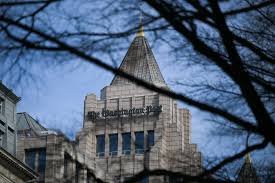
In a significant legal blow to the Trump Media and Technology Group, a federal judge in Florida has dismissed a high-profile defamation lawsuit filed against The Washington Post. The lawsuit, which sought a staggering $3.8 billion in damages, centered on a 2023 report discussing the potential links between Truth Social and a bank described as “porn-friendly.”
The court’s decision underscores the rigorous legal standards required for public figures to win a defamation case in the United States, highlighting the tension between corporate reputations and the freedom of the press.
Understanding the ‘Actual Malice’ Standard
The turning point of the case rested on a specific legal concept known as “actual malice.” For a public figure or a prominent entity to prevail in a defamation claim, it is not enough to prove that a statement was incorrect. They must provide clear and convincing evidence that the publisher:
- n
- Knew the information was false at the time of publication; or
- Acted with reckless disregard for whether the information was true or false.
U.S. District Judge Thomas Barber ruled that Trump Media failed to present sufficient evidence to meet this heavy burden. The judge noted that the reporting by Drew Harwell was the result of a thorough investigation, making it impossible for a jury to conclude that the newspaper acted with malice.
A Pattern of Legal Battles
This dismissal is not an isolated incident. Trump Media has built a reputation for aggressively pursuing news organizations that publish critical coverage. However, many of these attempts have ended in failure:
- n
- The Guardian: A similar lawsuit was thrown out by a Florida judge last November and later dropped in April.
- The Wall Street Journal: A lawsuit regarding reporting on Jeffrey Epstein was dismissed in April, though it was later refiled.
- Ongoing Litigation: The company still faces legal battles with the BBC, The New York Times, and the Des Moines Register.
The Financial State of Truth Social
While the company positions itself as a bold alternative to “Big Tech” and traditional media, its financial health tells a different story. According to public filings, the publicly traded company has struggled significantly, generating less than $1 million in revenue during the first quarter of this year.
Critics argue that these frequent lawsuits are more about generating publicity and exerting pressure on journalists than about recovering actual financial losses.
Conclusion: The Victory for Press Freedom
The dismissal of this case serves as a reminder of the protections afforded to journalists when reporting on figures of public interest. While The Washington Post did issue a correction regarding two specific assertions in the story, the court recognized that the reporting process was conducted in good faith based on the information available at the time.
For those interested in the legal nuances of free speech and press law, the American Bar Association provides extensive resources on the evolution of defamation laws and the First Amendment.



