
Energy Markets in Turmoil: Oil Futures Skyrocket Amid US-Iran Conflict
The global energy landscape experienced a violent shift this week as oil futures surged nearly 6%, triggered by a sudden escalation in geopolitical tensions between the United States and Iran. The volatility comes on the heels of U.S. military strikes in response to attacks on shipping vessels in the strategic Strait of Hormuz.
The Catalyst: A Collapsed Agreement
During the NATO summit in Ankara, Turkey, U.S. President Donald Trump sent shockwaves through the commodities market by declaring that the interim agreement with Iran is effectively “over.” Despite mentioning that talks might continue, his blunt assessment that dealing with Tehran is a “waste of time” sparked immediate panic among traders.
The conflict centers on the Strait of Hormuz, a critical artery for global oil supplies. While an interim deal had previously allowed ships to pass without charges for 60 days, Tehran’s insistence on controlling vessel routes and imposing passage fees has upended decades of maritime practice, leading to the current military friction.
Market Breakdown: The Numbers
The reaction in the oil pits was instantaneous. Investors rushed to hedge against potential supply disruptions, leading to significant gains in benchmark prices:
- n
- Brent Crude: Jumped 5.6%, climbing past the $78 per barrel mark.
- U.S. Benchmark Crude (WTI): Surged 5.8%, reaching $74.55 per barrel.
For a deeper understanding of how these benchmarks are calculated and their impact on the global economy, you can visit the U.S. Energy Information Administration (EIA).
The Domino Effect: From Oil to AI Stocks
The instability isn’t confined to energy. Market analysts are observing a dangerous correlation between geopolitical headlines and a correction in the technology sector. The “AI craze,” which had pushed valuations to historic highs, is now facing a reality check as investors pivot toward risk-aversion.
Global Market Impact:
- n
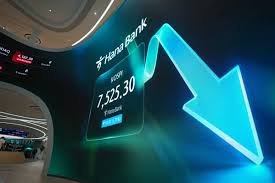
- Asia: South Korea’s Kospi plummeted 5.4%, with AI giants like Samsung Electronics and SK Hynix seeing heavy sell-offs. Tokyo’s Nikkei 225 also declined by 2.1%.
- Europe: Germany’s DAX shed 1.1%, and France’s CAC 40 dropped 0.9%.
- USA: Technology heavyweights such as Intel and AMD experienced sharp declines, with Intel shedding nearly 9.7%.
What to Expect Next?
According to market experts, sentiment will remain fragile. As Ipek Ozkardeskaya of Swissquote noted, geopolitical headlines are currently the primary driver of market sentiment. If the situation in the Strait of Hormuz deteriorates further, we could see a prolonged period of high oil futures prices and continued stress on equity valuations, particularly in the high-growth tech sector.
Investors are advised to keep a close eye on official communications from the NATO summit and developments in the Persian Gulf, as these will dictate the next major move in both energy and stock markets.



