
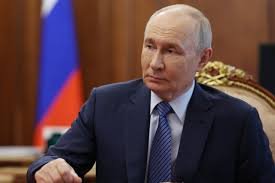
Vladimir Putin and Ukraine: Analyzing the Strategic Escalation Options
The conflict between Russia and Ukraine has evolved into one of the most complex geopolitical crises of the 21st century. As the war enters a grueling phase of attrition, global intelligence agencies and political analysts are closely monitoring the escalation options available to Vladimir Putin. The question is no longer just about territorial gain, but about the threshold of risk the Kremlin is willing to accept.
The Current Geopolitical Climate
For months, the frontlines have seen intense fighting with limited territorial shifts. However, the introduction of advanced Western weaponry and the shifting dynamics of international sanctions have put pressure on the Russian military command. In response, the discourse from the Kremlin has increasingly hinted at a willingness to deviate from traditional warfare strategies to force a favorable negotiation.
Potential Escalation Options for the Kremlin
Analysts suggest that Vladimir Putin has several levers he can pull to escalate the conflict, ranging from conventional military shifts to high-risk strategic maneuvers:
- n
- Expansion of Target Zones: Increasing strikes on critical infrastructure deeper within Ukrainian territory or targeting logistics hubs in neighboring countries.
- Increased Mobilization: A new wave of conscription to replenish troop levels, signaling a long-term commitment to a war of attrition.
- Cyber Warfare Intensification: Utilizing state-sponsored cyberattacks to disrupt not only Ukrainian grids but also the digital infrastructure of supporting Western allies.
- Nuclear Rhetoric and Posturing: The most concerning option involves the strategic deployment or the threat of using tactical nuclear weapons to deter NATO intervention.
The Role of NATO and the International Response
The escalation options considered by Russia are directly tied to the level of support provided by the United States and its NATO allies. The provision of long-range missiles and advanced air defense systems has shifted the battlefield, but it has also increased the risk of a direct confrontation between nuclear-armed powers.
According to reports from the Council on Foreign Relations, the balance between supporting Ukraine’s sovereignty and avoiding a Third World War is the most delicate diplomatic tightrope the West has walked in decades.
What This Means for Global Stability
The implications of an escalation go far beyond the borders of Eastern Europe. Energy markets, global food security, and the validity of international law are all at stake. If Putin chooses a path of significant escalation, the global economy could face unprecedented volatility, and the security architecture of Europe would be fundamentally rewritten.
Conclusion: A High-Stakes Game of Chicken
Vladimir Putin’s strategy appears to be a calculated gamble, testing the resolve of the West while attempting to maintain domestic control. As the world watches, the focus remains on whether diplomacy can still find a window of opportunity or if the current trajectory leads inevitably toward a broader confrontation.
For real-time updates on the diplomatic maneuvers and military movements, stay tuned to high-authority sources like Reuters and the BBC News.



