The Hidden Gems of Open World Gaming
When we talk about open world games, names like Grand Theft Auto, The Elder Scrolls, and The Legend of Zelda usually dominate the conversation. These titans defined the genre, but in their shadow, several innovative masterpieces were left forgotten.
From tragic studio closures to unfortunate release dates, some of the most creative experiences in gaming history didn’t get the spotlight they deserved. If you are looking for something beyond the mainstream, here are the most underrated open world gems that deserve a spot in your library.
1. The Saboteur: A City Awakening from Monochrome
Set in Nazi-occupied Paris, The Saboteur is more than just a stealth-action game; it is a visual metaphor. The world begins in stark black and white, reflecting the oppression of the regime. However, as you liberate districts, the city literally blooms into full color.
This innovative progress meter made every victory feel tangible. Sadly, developer Pandemic Studios was shut down by EA just weeks before the game launched, leaving this artistic achievement without a sequel. It remains one of the most striking art concepts in any open world environment.
2. Mafia II: The Art of the Atmospheric Stage
Unlike modern sandboxes filled with endless checklists, Mafia II treats its map, Empire Bay, as a meticulously crafted stage. It is a linear story wrapped in an open world coat, focusing on the rise of Vito Scaletta in the 1940s and 50s.
- n
- Historical Fidelity: Period-accurate cars and a legendary jazz soundtrack.
- Atmospheric Depth: The transition from summer streets to snow-covered alleys.
- Focused Storytelling: A narrative that doesn’t distract the player with irrelevant side-quests.
3. Dragon’s Dogma: Redefining RPG Combat
While Skyrim dominated the RPG landscape, Dragon’s Dogma was quietly innovating. It took the thrill of climbing giant creatures (inspired by Shadow of the Colossus) and integrated it into a massive fantasy world.
The real game-changer was the Pawn system—AI companions that learn from other players online, creating a unique form of asynchronous multiplayer. If you missed the original, the Dark Arisen version is the definitive way to experience this cult classic.
4. Sunset Overdrive: A Colorful Middle Finger to Grimdark
In an era of brown-and-grey post-apocalyptic worlds, Sunset Overdrive arrived as a neon-soaked explosion of joy. The game transforms the city into a playground of rail-grinding, wall-bouncing, and zip-lining.
With an absurd arsenal—including a bowling ball launcher—it prioritized movement and chaos over everything else. Though it suffered from being an Xbox exclusive during a lean period, its DNA can be seen in the traversal mechanics of modern hits like Marvel’s Spider-Man.
5. Dying Light: When the Sun Goes Down, the Game Changes
Dying Light didn’t just create an open world; it created two different games in one. By day, it’s a first-person parkour adventure focused on scavenging and exploration. By night, it transforms into a terrifying survival horror experience.
The introduction of Volatiles—fast, lethal predators—turned the empowering parkour of the daytime into a desperate scramble for survival. Despite launching alongside giants like The Witcher 3, it has since become a massive success with over 30 million copies sold.
6. Mad Max: The Ultimate Wasteland Fantasy
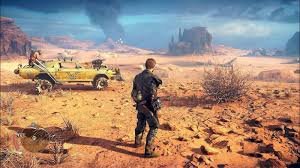
Rarely does a licensed game capture the essence of its source material as well as Mad Max. The game excels in its vehicular combat and the deep customization of the Magnum Opus, your mobile fortress.
The atmospheric storms and savage convoy battles make it a must-play for fans of the post-apocalyptic genre. Unfortunately, releasing on the same day as Metal Gear Solid V buried it in the news cycle, but the gameplay remains exceptional.
7. Gravity Rush 2: Defying the Laws of Physics
Created by the visionary Keiichiro Toyama, Gravity Rush 2 offers a traversal system unlike any other. Instead of walking, the protagonist Kat “falls” in the direction the player chooses, turning the entire cel-shaded city of Jirga Para Lhao into a 360-degree playground.
With its stunning anime-inspired art style and a vertical social commentary on class divide, it is a true artistic achievement. Since the closure of Sony’s Japan Studio, it stands as a poignant reminder of the creative risks that make gaming special.
Which hidden gem are you playing first?
The open world genre is vast, and while the AAA hits get the glory, these titles prove that innovation often happens on the fringes. Let us know in the comments which of these games you’ve played or which one you’re adding to your wishlist!