
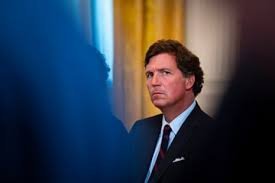
Beyond the Republican Party: Is Tucker Carlson Orchestrating a Political Shift?
For years, Tucker Carlson was one of the most influential voices within the conservative movement, providing a massive platform for the ideologies that shaped the modern Republican Party. However, the former Fox News host is now signaling a profound disillusionment with the current state of American politics, suggesting that the two-party system is no longer serving the interests of the people.
In a recent revealing interview with the Columbia Journalism Review (CJR), Carlson expressed a desire to help build a third political party in the United States. While he was vague about the concrete steps of this project, his rhetoric points toward a growing schism between the populist “America First” wing and the traditional establishment of the Republican Party.
A “One-Party State” in Disguise
Carlson’s critique isn’t just about personalities; it’s about the systemic machinery of power. He argues that when it comes to critical issues like finance and foreign war, both major parties act in lockstep, creating an illusion of choice. According to Carlson, the US has effectively become a “one-party state posing as a democracy,” which he believes must be broken to restore true representation.
Key reasons for Carlson’s frustration include:
- n
- Foreign Intervention: His intense opposition to military interventions and the perceived influence of pro-Israel donors on US policy.
- Economic Decline: The struggle of the American working class, citing a decrease in life expectancy and diminished opportunities for the youth.
- The Trump Rift: A breakdown in his relationship with Donald Trump, specifically regarding the approach to Iran.
The Intersection of AI, Immigration, and Nationalism
One of the most striking aspects of Carlson’s current worldview is his link between technology and border policy. He has suggested that the rise of Artificial Intelligence (AI) makes immigration unsustainable, arguing that as white-collar jobs vanish due to automation, the country cannot justify adding more people to the labor market.
This nationalist-isolationist stance distinguishes his brand of “America First” from the broader MAGA movement. While both share a skepticism of globalism, Carlson’s approach is more radical, calling for an end to immigration and a total pivot toward the welfare of the domestic population over global strategic interests.
Will He Run for Office?
Despite relentless speculation that he might seek a nomination to lead the Republican Party or launch his own candidacy, Carlson has remained firm: “I don’t want to be a candidate.”
Instead, Carlson seems content to exercise influence from the sidelines—first through Fox News, and now through his independent podcast. His strategy, or lack thereof (as he claims to act on “smell and instinct”), involves shifting the cultural needle rather than navigating the bureaucratic hurdles of a political campaign.
The Rise of Christian Nationalism
Adding another layer to his evolution is Carlson’s increasing lean toward Christian nationalism. By integrating biblical rhetoric into his political commentary and distancing himself from the secular ethics of the modern political elite, he is appealing to a specific, deeply conservative demographic that feels abandoned by both the Democratic and the Republican Party.
Whether this quest for a third party is a serious political endeavor or merely the musings of a media provocateur remains to be seen. However, his influence suggests that the ideological boundaries of the American right are continuing to fracture, leaving the future of the Republican Party in a state of uncertainty.
For more analysis on the current state of global political shifts, you can visit Reuters US News for real-time updates.



