
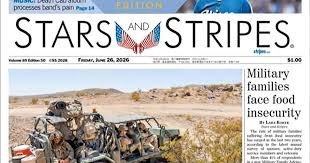
Stars and Stripes: The Battle for Editorial Independence in the U.S. Military
In a world where headlines are often dominated by global catastrophes and Supreme Court rulings, one publication focuses on a very specific, yet vital, audience: the American service member. Stars and Stripes is not your typical newspaper. While it is funded by the Department of Defense, its heartbeat has always been its commitment to editorial independence.
However, this independence is currently facing a significant challenge. From accusations of “woke distractions” to restrictive new memos, the publication is locked in a struggle to remain a source of truth for those serving in the armed forces.
A Legacy of Truth and Grit
The history of Stars and Stripes is as storied as the military itself. Originally established during the Civil War and revived during World War I by General John “Black Jack” Pershing, the paper was designed to give troops a sense of purpose and a voice. Pershing believed the publication should speak the thoughts of the “New American Army.”
For decades, the paper has been a symbol of free expression. This was most evident during World War II with the legendary cartoons of Bill Mauldin. Mauldin’s work depicted the raw, unvarnished reality of war—muddy, unshaven, and exhausted soldiers. While figures like General George Patton despised the lack of “spiffiness,” General Eisenhower protected the publication, recognizing that the troops valued authenticity over propaganda.
Modern Clashes: The Pentagon vs. Press Freedom
Fast forward to the present, and the tension between military leadership and journalistic integrity has resurfaced. The current administration’s push to “modernize” the paper has raised alarms. A spokesperson for the Pentagon recently suggested the need to refocus content away from “woke distractions” to maintain morale.
But what constitutes a “distraction”? For editor-in-chief Erik Slavin and his team, the mission is simple: cover the military community. This includes everything from drone tactics and food insecurity to cultural events like Bad Bunny concerts for soldiers stationed overseas. As reporter Lara Korte puts it, she works for the military community, not for any specific administration or policymaker.
The Red Line: Censorship and Legal Battles
The struggle for the soul of Stars and Stripes has moved beyond rhetoric into restrictive policy. Recent developments have sparked significant controversy:
- n
- Operational Restrictions: A 2026 memo restricted the use of comics and banned paid wire services, including the Associated Press, making breaking news coverage significantly more difficult.
- The Firing of the Ombudsman: Jacqueline Smith, the paper’s editorial watchdog, was fired shortly after criticizing restrictions on cartoons—a move many see as retaliation.
- First Amendment Lawsuits: Members of the paper’s advisory board have filed lawsuits, arguing that the Department of Defense is violating the First Amendment by exercising editorial control.
Why Independent News Matters for the Military
The core of the issue lies in the distinction between public relations and journalism. When a government agency decides what can or cannot be printed, the publication risks becoming a propaganda machine.
For Erik Slavin, the “red line” is clear: he will not replace accurate reporting with Pentagon-written scripts. In an era of global instability, providing service members with independent, reliable news is not just a journalistic duty—it is a necessity for the health of the military community.
As the legal battles continue, the fate of Stars and Stripes will likely serve as a litmus test for the survival of press freedom within the halls of the U.S. Department of Defense.



