A New World Discovered: Meet HD-137010 b, the ‘Ice Cold Earth’
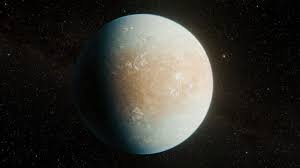
Astronomers have announced the exciting discovery of HD-137010 b, a rocky exoplanet remarkably similar to Earth, located just 150 light-years away. This intriguing world, dubbed an ‘ice cold Earth,’ presents a fascinating case for potential habitability despite its frigid temperatures.
What Makes HD-137010 b Special?
The exoplanet candidate, HD-137010 b, is estimated to be slightly larger and approximately 1.2 times the mass of our planet. What’s even more compelling is its orbital period – a year on HD-137010 b lasts roughly 355 days, mirroring our own!
Researchers estimate a 51% chance that HD-137010 b resides within the habitable zone of its star, HD-137010, a K dwarf. This zone is the sweet spot where temperatures could allow for liquid water to exist on the planet’s surface. K dwarfs are smaller and cooler than our Sun, offering a longer lifespan and potentially stable conditions for life to evolve. You can learn more about stellar evolution at NASA’s Stellar Evolution page.
A Chilly Climate, But Not Necessarily Barren
While residing in the habitable zone, HD-137010 b receives significantly less energy from its star – less than a third of what Earth receives from the Sun. This results in estimated surface temperatures ranging from -68 to -85 degrees Celsius (-90 to -121 degrees Fahrenheit), colder than even Mars.
However, don’t write off the possibility of liquid water just yet! A moderately CO2-rich atmosphere could create a greenhouse effect, potentially warming the planet enough to sustain liquid water on its surface. However, a high CO2 concentration could also lead to a ‘snowball’ climate, completely freezing the planet.
How Was HD-137010 b Discovered?
The discovery was made using data from NASA’s Kepler Space Telescope, a pioneering planet-hunting observatory. Kepler employed the transit method, observing dips in a star’s brightness as a planet passes in front of it. This technique allows astronomers to determine the planet’s size and orbital characteristics.
Currently, astronomers have only observed one transit of HD-137010 b, requiring further observations to confirm its planetary status. Future telescopes, like the ESA’s PLATO, will be crucial for these follow-up studies.
The Potential for a Solar System
HD-137010 b may not be alone. The possibility exists that other planets orbit the same star, potentially forming a complex system similar to our own, with planets extending throughout the habitable zone and even a gas giant like Jupiter further out.
Could Life Exist on an ‘Ice Cold Earth’?
While a frozen world might seem inhospitable, Earth itself has experienced ‘snowball’ periods throughout its history. The discovery of HD-137010 b demonstrates the detectability of temperate, Earth-sized exoplanets orbiting Sun-like stars, opening up exciting new avenues for the search for life beyond Earth.
This research was published in The Astrophysical Journal Letters.