
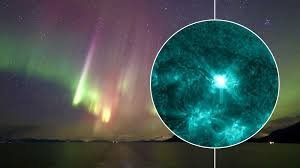
Solar Flare Alert: Is a ‘Machine-Gun Sun’ Bringing Auroras to the US?
Space enthusiasts and aurora chasers, get your cameras ready! The sun has shifted into high gear, unleashing a series of powerful eruptions that could paint the night sky in vibrant colors this holiday weekend. From massive X-class bursts to a rapid-fire sequence of M-class events, the solar atmosphere is currently a hotbed of activity.
The “Machine-Gun Sun”: What’s Happening?
The recent solar activity has been nothing short of extraordinary. After a powerful X1.1 solar flare struck on June 30, the sun didn’t slow down. In a staggering 24-hour window, it fired off 10 M-class solar flares, leading solar physicist Tamitha Skov to describe the phenomenon as a “Machine-gun sun.”
These eruptions are more than just flashes of light. Many were accompanied by Coronal Mass Ejections (CMEs)—massive clouds of solar plasma and magnetic fields hurtling through space. When these CMEs are Earth-directed, they interact with our own magnetic field, triggering what we know as geomagnetic storms.
Quick Breakdown of the Recent Solar Activity:
- n
- X-Class Flare: The most intense category of solar flares, capable of triggering planet-wide radio blackouts.
- M-Class Flares: Medium-sized eruptions that can cause brief radio blackouts in polar regions.
- CMEs: The actual “cannonballs” of plasma that cause the geomagnetic storms responsible for auroras.
Will We See the Northern Lights?
The big question for those in the Northern Hemisphere is whether this solar barrage will result in visible auroras. According to data from NOAA’s Space Weather Prediction Center, the forecast is looking promising.
“NOAA and NASA model predictions do not show all the storms yet,” noted Tamitha Skov, explaining that the rapid succession of eruptions makes them difficult to track in real-time.
Forecasters are predicting G1 (Minor) to G2 (Moderate) geomagnetic storm conditions. If the magnetic orientation of the incoming CMEs aligns favorably with Earth’s field, the energy transfer will be more efficient, potentially pushing the Northern Lights further south than usual.
Potential Viewing Locations in the US
While usually reserved for the far north, a G2 storm could make the aurora visible in several US states, including:
- n
- New York
- Idaho
- Other northern border states
Tips for Aurora Hunting this Weekend
If you’re hoping to catch these celestial fireworks, keep these tips in mind:
- Find Dark Skies: Get away from city lights to increase your chances of spotting the glow.
- Check the Forecast: Keep a close eye on NASA’s space weather updates for real-time alerts.
- Prepare Your Gear: Ensure your camera batteries are fully charged and use a tripod for long-exposure shots.
- Watch the Clock: Keep in mind that short summer nights and lingering twilight can make auroras harder to spot.
Whether you are a seasoned astronomer or a curious skywatcher, this July 4th weekend offers a thrilling opportunity to witness the raw power of our star. Stay alert, keep your eyes on the horizon, and enjoy the show!



