
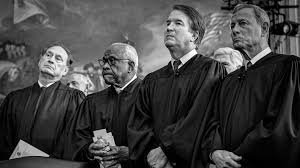
The End of Contribution Caps? Understanding the Latest Supreme Court Blow to Campaign Finance
In a move that has sent shockwaves through the American political landscape, the Supreme Court has once again dismantled restrictions on how money flows into elections. The recent decision regarding the gop senate campaign finance lawsuit effectively erases long-standing limits on the coordination between political parties and their candidates, paving the way for an unprecedented surge of wealthy influence in Washington.
The Core of the Controversy: NRSC v. FEC
The ruling in NRSC v. FEC centers on a critical legal loophole. For years, federal law sought to prevent “coordinated expenditures,” ensuring that parties couldn’t simply act as a pass-through for donors to bypass individual contribution limits. However, the Court’s conservative majority, led by Justice Brett Kavanaugh, has ruled that these restrictions violate the First Amendment.
By framing the ability of a party to coordinate with its candidate as a matter of free speech, the Court has essentially allowed political parties to serve as “alternative checking accounts” for campaigns. This means that while a direct contribution to a candidate might be capped at a relatively low amount (currently around $7,000), a donor can now route hundreds of thousands of dollars through a party to be spent in direct coordination with that candidate.
A Clash of Judicial Philosophies
The decision revealed a deep partisan divide within the Court:
- n
- The Majority View: Justice Kavanaugh argued that coordination limits create a “stifling effect” on political parties, preventing them from fulfilling their primary purpose of supporting their candidates.
- The Dissenting View: Justice Elena Kagan issued a sharp warning, stating that the ruling “jettisons a rule needed to protect our democracy’s integrity.” She argued that the decision leaves the government powerless to stop quid pro quo corruption.
The “Billionaire Pie”: Who Really Wins?
While the ruling is framed as a victory for “free speech,” the practical winners are the ultra-wealthy. Data indicates a significant disparity in how these funds are utilized. Recent reports suggest that Republicans have historically secured a much larger share of billionaire donations than Democrats, meaning this ruling provides a disproportionate advantage to GOP infrastructure.
This is not an isolated event but part of a decade-long trend. From the landmark Citizens United decision to the current gop senate campaign finance lawsuit fallout, the Roberts Court has consistently eroded the anti-corruption framework established after the Watergate scandal.
What This Means for the Average Voter
For the citizens of the United States, the immediate consequences will likely be felt in their mailboxes and on their screens. With parties now able to buy advertising time at lower candidate rates through coordinated spending, voters should expect:
- An onslaught of political ads: Campaigns will stretch their dollars further, leading to longer and more aggressive advertising cycles.
- Increased Oligarchic Influence: Wealthy donors gain more leverage to extract favors from elected officials.
- Decreased Transparency: Despite the Court’s claim that public records provide enough transparency, the sheer volume of coordinated spending makes it harder to track actual influence.
As we approach the next election cycle, the line between a political party and a candidate’s private campaign fund has virtually disappeared. For more information on current regulations, you can visit the official Federal Election Commission (FEC) website.



