
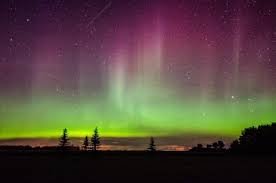
A Celestial Show Awaits: Your Guide to the Upcoming Northern Lights
Get your telescopes and cameras ready! According to the latest northern lights forecast, skywatchers in the northern United States may be treated to a stunning display of the Aurora Borealis. From the night of Monday, June 29, into Tuesday, June 30, a surge of solar energy is expected to dance across the northern horizon.
But what is causing this phenomenon, and where is the best place to witness it? Let’s dive into the details of this geomagnetic event.
What’s Triggering the Aurora?
The potential display is driven by a Coronal Mass Ejection (CME)—a massive cloud of charged particles—that erupted from the sun on June 26. Unlike solar flares, which travel at the speed of light, CMEs are slower, taking a few days to cross the solar system. When these particles collide with Earth’s magnetic field, they create geomagnetic storms.
Current models from NASA and other space agencies suggest a G1 (Minor) to G2 (Moderate) geomagnetic storm. While not a massive solar outbreak, these conditions (KP 4 or KP 5) are often enough to push the northern lights visible into the far northern tier of the US.
Where to Watch: Best US States for Viewing
If you are located near the Canadian border, your chances are much higher. The following states have the highest potential for visibility:
- n
- Prime Viewing: Washington, Idaho, Montana, North Dakota, South Dakota, Minnesota, Wisconsin, Michigan, and Maine.
- Possible Sightings: Oregon, Wyoming, Nebraska, Iowa, Illinois, Indiana, Ohio, New York, Vermont, and New Hampshire.
Challenges for This Event: The Strawberry Moon and Solstice
While the forecast is promising, two factors might make spotting the lights a bit more challenging this time:
- Post-Solstice Daylight: Since we are just past the summer solstice, the long daylight hours mean the sky doesn’t get completely dark, reducing the contrast needed to see the aurora.
- The Strawberry Moon: The full Strawberry Moon rising on June 29 will add a beautiful glow to the sky, but its brightness may hinder the visibility of faint auroral displays.
Pro Tips for the Best Viewing Experience
To maximize your chances of seeing the magic, follow these expert tips:
- Look North: The aurora will most likely appear on the northern horizon.
- Escape Light Pollution: Get as far away from city lights and streetlamps as possible.
- Use Technology: Cameras are more sensitive than the human eye. Use long-exposure settings on your smartphone or DSLR to capture colors that may seem faint or grey to the naked eye.
How to Track the Aurora in Real-Time
Space weather is volatile and can change in minutes. To stay updated, we recommend using these high-authority tools:
- NOAA Space Weather Prediction Center: The gold standard for official aurora forecasts.
- Mobile Apps: Download Aurora Now, My Aurora Forecast, or Glendale Aurora for live solar wind data.
- The Bz Factor: If you use advanced apps, look for the Bz component. When Bz swings south (negative values, e.g., -5 nT or stronger), it allows solar plasma to enter Earth’s magnetosphere, significantly increasing the chance of a visible display.
Whether you catch a glimpse of shimmering greens or a faint glow, the northern lights remind us of the incredible connection between our planet and the sun. Clear skies and happy hunting!



