A New Chapter in the Quest for Universal Truths
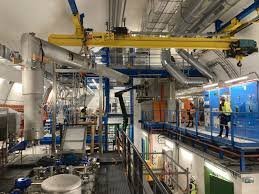
The Large Hadron Collider (LHC), the most powerful particle accelerator ever conceived by humankind, has officially closed a monumental chapter of its scientific journey. After years of pushing the boundaries of known physics, the accelerator has been powered down to begin Long Shutdown 3 (LS3).
But this isn’t an end; it’s a transformation. This period of intense maintenance and consolidation is designed to prepare the laboratory for the High-Luminosity LHC (HiLumi LHC), a next-generation phase that promises to peel back even more layers of the fundamental laws of nature.
The Extraordinary Legacy of the LHC
Since the first beams circulated in September 2008, the LHC has been a beacon of international collaboration and scientific breakthrough. Over three operational runs, it has provided a goldmine of data that has reshaped our understanding of the cosmos.
The crowning achievement occurred on July 4, 2012, when the ATLAS and CMS collaborations announced the discovery of the Higgs boson. This discovery confirmed a theoretical mechanism proposed nearly fifty years prior, explaining how particles acquire mass.
Beyond the Higgs boson, the LHC has delivered:
- The discovery of over 85 new hadrons.
- Crucial insights into the imbalance between matter and antimatter.
- Explorations into the nature of quark–gluon plasma.
- Groundbreaking measurements with profound implications for modern astrophysics.
What is the High-Luminosity LHC (HiLumi LHC)?
Scheduled to begin operations in 2030, the HiLumi LHC is not just a tweak—it’s a massive upgrade. The primary goal is to increase the collider’s luminosity by a factor of up to ten compared to its original design.
Why does luminosity matter? In particle physics, higher luminosity means more collisions. More collisions result in larger datasets, allowing scientists to perform precision studies of the Higgs boson and significantly increasing the chances of discovering phenomena that exist beyond the Standard Model.
The Engineering Marvel of Long Shutdown 3 (LS3)
The LS3 is the most extensive intervention since the LHC was first built. It is a logistical and engineering undertaking of unprecedented scale, involving thousands of specialists from CERN and partner institutes worldwide.
Key technical upgrades include:
- Magnet Replacement: Approximately 1.2 km of magnets and components will be replaced with state-of-the-art equipment.
- Detector Evolution: The ATLAS and CMS experiments are being transformed into renewed detectors to handle between 140 and 200 proton–proton collisions per bunch crossing (up from 60).
- Advanced Trigger Systems: To manage over five billion interactions per second, new trigger systems will be installed to filter and select the most scientifically valuable events.
- High-Precision Tech: Installation of all-silicon tracking systems and high-precision timing detectors with resolutions of just a few tens of picoseconds.
The Future of Physics: What Comes Next?
While the beams are silent, the science is not. Thousands of researchers are currently analyzing the vast archives of data from previous runs, extracting new results while prepping for the 2028 gradual restart.
As we look toward 2030, the HiLumi LHC stands as a testament to human curiosity and global cooperation. By refining our tools and expanding our vision, we are moving closer to answering the most fundamental questions: What is the universe made of? And why does it behave the way it does?
Stay tuned as CERN continues to lead the charge into the next era of high-energy physics.