
The Tension Between Public Reputation and Freedom of the Press
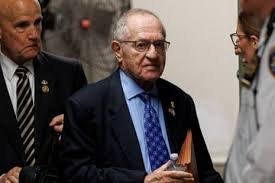
In a landmark moment for media law, the US Supreme Court has declined to hear a request from former Harvard Law professor Alan Dershowitz to revive a massive $300 million defamation lawsuit against CNN. This decision isn’t just about one man’s reputation; it’s a pivotal reinforcement of the freedom of the press and the legal protections that allow journalists to report on public figures without the constant fear of bankrupting litigation.
The Core of the Conflict: What Happened?
The legal battle began in 2020, stemming from CNN’s coverage of remarks Dershowitz made while defending Donald Trump during one of his first-term impeachment trials. Dershowitz alleged that the network intentionally edited his comments to make him appear as though he had “lost his mind.”
The controversy centered on a specific exchange with Senator Ted Cruz regarding the legality of a quid pro quo. While Dershowitz argued that his words were twisted to suggest a president could avoid impeachment for illegal acts as long as they believed it served the national interest, CNN maintained that their reporting was accurate.
The “Actual Malice” Standard: A Shield for Journalism
To understand why this case was dismissed, we must look at the cornerstone of American media law: New York Times Co v. Sullivan (1964). This precedent established that public figures cannot win a defamation suit simply by proving a statement was false. Instead, they must prove “actual malice.”
In legal terms, actual malice means the publisher:
- n
- Knew the information was false, OR
- Acted with reckless disregard for whether it was true or false.
A lower court previously tossed out Dershowitz’s suit, ruling that he failed to prove CNN acted with such malice. By refusing to take up the case, the Supreme Court has kept this high bar in place, ensuring that the First Amendment continues to protect robust public debate.
Dissenting Voices and the Future of Media Law
Despite the majority decision, the ruling was not unanimous. Conservative justices Neil Gorsuch and Clarence Thomas dissented, suggesting that the Court should reconsider the standards set by the 1964 Sullivan ruling. They argue that the current standard may have become too protective of media outlets, potentially leaving public figures without recourse for egregious misrepresentations.
Why This Matters for Democracy
CNN’s legal team argued that overruling the actual-malice standard would cause “lasting damage” to the democratic process. They asserted that these protections are essential for self-determination in a democratic society, allowing the press to act as a watchdog without the chilling effect of strategic lawsuits (SLAPPs).
As we navigate an era of rapid information flow and intense political polarization, the balance between individual reputation and the freedom of the press remains one of the most critical legal tightropes in the United States.
For more deep dives into constitutional law, you can explore the resources available at the Cornell Law School Legal Information Institute.



