
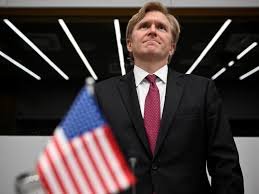
Who is Elbridge A. Colby?
In the complex world of modern geopolitics, few voices are as influential and provocative as Elbridge A. Colby. A seasoned strategist and former official at the U.S. Department of Defense, Colby has emerged as a leading authority on national security, specifically regarding the strategic competition between the United States and China.
Colby’s approach is not merely about maintaining a presence in Asia; it is about a fundamental restructuring of how the U.S. projects power to ensure long-term global stability. His insights often challenge the status quo, pushing for a more focused and realistic foreign policy.
The Core of Colby’s Strategy: The China Challenge
The central pillar of Elbridge Colby’s philosophy is the belief that China represents the most significant strategic challenge to the United States in the 21st century. Unlike traditional diplomats who seek a balance of cooperation and competition, Colby argues that the U.S. must prioritize the Indo-Pacific region above all other global concerns.
Key Strategic Pillars
- n
- Strategic Prioritization: Colby suggests that the U.S. cannot be the “global policeman” in every region. To succeed in the Pacific, the U.S. must shift resources away from less critical theaters.
- Deterrence through Strength: He emphasizes the need for a credible military deterrent that makes any potential conflict in the Taiwan Strait too costly for Beijing to contemplate.
- Strengthening Alliances: While emphasizing U.S. leadership, Colby stresses the importance of deeply integrating allies like Japan, Australia, and South Korea into a cohesive security architecture.
Why His Perspective Matters Today
As tensions rise in the South China Sea and the global economy becomes increasingly fragmented, Colby’s writings—often featured in high-authority publications like Foreign Affairs—provide a roadmap for those seeking a “realist” approach to international relations.
His arguments often center on the idea of preventing war through preparation. By clearly defining the “red lines” and building the necessary industrial and military capacity, the U.S. can avoid the traps of accidental escalation while maintaining a position of strength.
The Future of Indo-Pacific Security
The debate surrounding Elbridge A. Colby’s theories reflects a broader shift in American foreign policy. The move from a post-Cold War era of engagement toward a new era of Great Power Competition is a transition that Colby has helped articulate for policymakers and scholars alike.
Whether one agrees with his hawkish stance or prefers a more diplomatic route, it is impossible to ignore the impact of his strategic frameworks on the current discourse of national security.
For further reading on the dynamics of global power and strategic studies, exploring resources from the Brookings Institution can provide additional context to the challenges faced in the Indo-Pacific region.



