
Super El Niño 2026: How It Will Transform the US Winter and Ski Season
Prepare your gear and check your maps: a powerful El Niño is forecasted to dominate the upcoming winter season. For outdoor enthusiasts and residents across the United States, this isn’t just a meteorological curiosity—it’s a signal that the 2026 winter could be anything but ordinary.
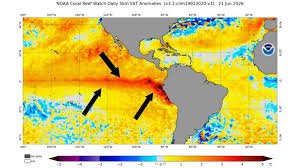
According to data from the NOAA Coral Reef Watch, sea surface temperature anomalies in the Pacific are trending upward. If these patterns hold, we are looking at a “super” El Niño event that will fundamentally shift where the snow falls and where the warmth lingers.
What Exactly is El Niño?
At its core, El Niño is a periodic warming of the equatorial eastern and central Pacific Ocean. While it starts in the water, its effects ripple across the globe, throwing traditional weather patterns “out of whack.”
For the 2026 cycle, experts anticipate water temperatures could rise up to 2 degrees Celsius above average by September. By the time the first ski lifts begin to spin in October, the ocean will likely have crossed the threshold into “super” El Niño status, triggering a chain reaction in the atmosphere.
The Great Divide: North vs. South Snowfall
If you’re planning a ski trip for the 2026 season, the most important rule is: look south. El Niño typically shifts the jet stream, creating a stark contrast in winter conditions across the US.
The Northern Tier: Warmer and Drier
For those in the Northern US, a strong El Niño often translates to a disappointing winter for snow lovers. Historically, these regions experience:
- n
- Higher than average temperatures.
- Frequent thaws and rainfall instead of snowfall.
- Shorter ski seasons in the Green and White mountains.
The Southern Tier: A Winter Wonderland?
Conversely, the southern US—stretching from parts of California to the Carolinas—often sees a wetter-than-average winter. A stronger El Niño can significantly boost snowfall in southern mountainous regions. For instance, cities like Flagstaff, Arizona, have historically seen over two additional feet of snow during strong El Niño years compared to average seasons.
Learning from the Past: 2024 vs. 2026
To understand what’s coming, we can look at the 2023-2024 winter. That season was a strong El Niño, yet it was a “mixed bag.” While the Northern Tier suffered from record-breaking warmth—with eight states seeing their warmest winter ever—the expected southern rainy spell didn’t fully materialize.
However, the 2026 forecast suggests a warming trend even more intense than the previous cycle. This means the “north-south split” could be even more pronounced, making strategic travel essential for anyone chasing fresh powder.
Summary: How to Prepare for the 2026 Winter
Whether you are a business owner in the tourism industry or a winter sports enthusiast, staying informed via the National Weather Service is key. Here is a quick cheat sheet for the 2026 outlook:
| Region | Expected Trend | Impact on Skiing |
|---|---|---|
| Northern US | Warmer/Drier | Less snow, shorter season |
| Southern US | Wetter/Cooler | Potential for heavy snowfall |
As the Pacific continues to warm, the 2026 winter promises to be a fascinating study in climate volatility. Keep your eyes on the tropics, and your skis ready for the south!



