
Escalation in the Strait: US Military Responds to Iranian Aggression
In a sudden escalation of geopolitical tensions, the US military conducted targeted strikes against Iranian military assets surrounding the strategically vital Strait of Hormuz. This operation, confirmed by US Central Command (CENTCOM), comes as a direct response to an Iranian attack on a commercial vessel earlier this week.
According to official reports, the US aircraft specifically targeted Iranian missile and drone storage facilities as well as coastal radar sites. CENTCOM described the Iranian action against commercial shipping as “unwarranted aggression” and a clear violation of the existing ceasefire agreement.
The Catalyst: A “Foolish Violation” of the Peace
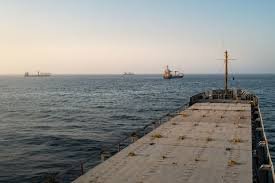
The spark for this military response was a drone strike launched by Tehran on Thursday. The Islamic Republic of Iran reportedly deployed several “One Way Attack Drones” against ships traversing the waterway. While US forces managed to intercept three of the drones, one successfully struck the upper deck of a high-value cargo ship.
President Donald Trump characterized the incident as a “foolish violation” of the agreement meant to end the war with Iran. Writing on Truth Social, the President noted that while the ship sustained damage, it was able to continue its journey. However, the event has raised serious questions about the stability of the current peace efforts.
Key Details of the Incident:
- Target: A large, expensive commercial cargo vessel.
- Weaponry: One Way Attack Drones.
- Outcome: Bridge damage to the ship; no casualties or environmental leaks reported by the UK Maritime Trade Operations.
- US Response: Precision strikes on radar sites and weapons storage.
Political Fallout and the “You’ll Find Out” Mystery
Despite the military response, the White House remains cryptic about the future of US-Iran relations. When pressed by reporters in the Oval Office regarding further consequences for Tehran, President Trump offered a short, enigmatic response: “You’ll find out.”
This uncertainty comes at a precarious time. The US and Iran had recently signed a memorandum of understanding to reopen the strait and restart negotiations regarding Iran’s nuclear program. The Council on Foreign Relations often highlights that the Strait of Hormuz is one of the world’s most critical oil transit chokepoints, making any conflict here a potential global economic trigger.
The Battle for Control over the Strait of Hormuz
The conflict isn’t just about drones and missiles; it’s about leverage and legality. Iran views control of the waterway as a primary bargaining chip in diplomatic negotiations. Recently, the Islamic Revolutionary Guard Corps (IRGC) warned that safe passage would only be guaranteed for ships following routes approved by Tehran.
Conversely, the Trump administration insists that the strait must remain free, open, and toll-free. The disagreement over whether Iran can charge fees for passing vessels remains a major point of contention, complicating the effort to return maritime traffic to pre-war levels.
As the US continues to monitor the region, the world watches to see if these strikes will lead to a broader conflict or force a more disciplined adherence to the ceasefire.



