
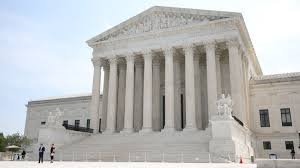
A Seismic Shift in US Immigration Law: The Supreme Court’s Latest Rulings
In a series of landmark decisions that have sent shockwaves through immigrant communities, the United States Supreme Court has delivered a major victory to the Trump administration. The rulings primarily focus on the ability of the executive branch to terminate temporary protections and tighten controls at the southern border, significantly increasing the risk of deportation for hundreds of thousands of people.
The End of Temporary Protected Status (TPS) for Haiti and Syria
The Court has ruled that the President possesses the authority to end Temporary Protected Status (TPS) for foreign nationals from countries plagued by war and natural disasters. This specific decision puts approximately 350,000 Haitians and 6,000 Syrians at immediate risk.
Writing for the majority, Justice Samuel Alito emphasized that the law bars courts from reviewing the Secretary of Homeland Security’s decisions regarding TPS. From the White House’s perspective, this is a “tremendous win,” reaffirming the stance that temporary status is, by definition, temporary and not a guaranteed path to legal residency.
The Controversial “Metering” Policy Returns
Beyond TPS, the Supreme Court cleared the path for the revival of a contentious policy known as “metering.” This tactic allows border officials to limit the number of asylum claims processed by turning migrants away before they even set foot on US soil.
- n
- The Legal Technicality: The Court held that an individual standing in Mexico has not “arrived in the United States” until they actually cross the border.
- The Result: This prevents many asylum seekers from being formally inspected, effectively blocking their access to the legal process of seeking safe haven.
The Human and Economic Cost
The decision has sparked fierce debate. Justice Sonia Sotomayor, in a rare and scathing verbal dissent, warned that the consequences are predictable: “More people will die.” She compared the current policy to the tragic history of the MS St. Louis, where Jewish refugees were turned away from US shores in 1939.
Beyond the humanitarian crisis, economists warn of a significant blow to the US economy. Data from FWD.us indicates that Haitian TPS holders contribute an estimated $5.9 billion to the US economy and pay billions in taxes, filling critical labor gaps in healthcare, hospitality, and retail.
Beyond Immigration: Other Key Court Decisions
While deportation and border security dominated the headlines, the Court also issued rulings on other high-profile issues:
- n
- Gun Rights: A Hawaii law banning firearms on certain private properties open to the public was struck down as unconstitutional.
- Corporate Liability: The Court sided with the manufacturer of Roundup, ruling that certain cancer-related lawsuits should be barred because the product lacked a federal cancer warning.
What Comes Next?
The legal battle is far from over. Several high-stakes cases remain pending, including challenges to birthright citizenship and mail-in ballot deadlines. As the Court navigates a deeply polarized political climate, its decisions continue to reshape the definition of citizenship, safety, and the rule of law in America.
For more official details on current rulings, you can visit the Supreme Court of the United States official website.



