Jarrett Allen and the Cavaliers’ Frustration: A Deep Dive into Foul Discrepancies
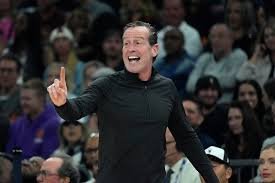
PHOENIX – A single number ignited the Cleveland Cavaliers’ collective frustration on Friday night: one. That’s the number of free throws the Cavs attempted through the first three quarters of their 126-113 loss to the Phoenix Suns, a result that snapped their winning streak. Throughout the game, Cavs coach Kenny Atkinson repeatedly held up one finger, signaling his discontent to the officiating crew.
This frustration culminated in Atkinson’s ejection with 10:59 remaining in the fourth quarter, while his team trailed by a significant 24 points. The core of the issue? A perceived imbalance in how the game was officiated.
Atkinson’s Outburst and the Free Throw Disparity
“We had one free throw after three quarters against a team that is 26th in fouls,” Atkinson stated after the game. “And the second free throw we got was after a flop. I’m not pleased. I thought the game got out of hand, quite honestly. Parts of the game seemed circus-like.”
Atkinson voiced concerns about the league’s direction, suggesting that certain players are allowed to operate with excessive freedom. “Certain characters in this league take liberties and we don’t stand up to them and the game turns into reviews, challenges, go to the monitor for 20 minutes when we’re just trying to play basketball. I don’t think it’s good for the league and I know it wasn’t good for us tonight.”
The coach’s initial technical foul came much earlier in the first quarter, stemming from his growing dissatisfaction with the officiating. Even after being separated from the officials – Mitchell Ervin, Nate Green, and Michael Smith – Atkinson pleaded for consistent calls on both sides of the court, a plea he felt went unanswered.
Turnovers and Physicality
Beyond the foul calls, the Cavaliers struggled with turnovers, committing a season-high 22 throughout the night. Eight turnovers occurred in both the first and second quarters. Atkinson attributed this to a combination of factors: lack of focus, the Suns’ defensive pressure, and the physicality of the game.
The breaking point came early in the fourth quarter when Atkinson protested a no-call on Sam Merrill’s drive against Collin Gillespie. His animated reaction, including bumping into a referee, led to his ejection.
“Sam dribbles the ball by Gillespie, and he has two hands on him. In basketball, you’re supposed to move your feet to stay in front,” Atkinson explained. Despite the incident, he acknowledged the Suns’ overall performance: “They were the better team and played much better.”
Player Reactions and the Bigger Picture
Donovan Mitchell, typically reserved, admitted he nearly received an ejection himself. “I’m trying to say this without losing money here,” Mitchell said. “I agree with my head coach. It’s a credit to [the Suns]. We didn’t really have it. It’s tough when you’re trying to drive and you’re getting grabbed. At some point, I deserve a few calls, but I didn’t get them.”
De’Andre Hunter echoed this sentiment, expressing frustration with a technical foul he received for a single comment. “I don’t really like talking about referees,” Hunter added. “That’s out of our control.”
Ultimately, the Cavaliers were called for 17 fouls, while the Suns were whistled for 19 – both teams finishing below their season averages. Cleveland managed only 11 free throw attempts, with just two coming while the game was still competitive. The Suns, in contrast, shot 18 free throws.
Looking Ahead
Atkinson anticipated a physical matchup against the Suns, praising their “hardest playing team in the NBA” mentality, a style he attributes to his former assistant, now Phoenix head coach, Jordan Ott. While the loss was a setback, it highlighted the need for the Cavaliers to match the Suns’ intensity and physicality in future contests. The game served as a reminder of the challenges of navigating officiating inconsistencies and maintaining composure in a highly competitive league.
You can find more in-depth coverage of the Cavaliers at Cleveland.com.