Unveiling the Cradle of Stars: New Insights from the James Webb Space Telescope
Space has always whispered its secrets to us, but with the James Webb Space Telescope (JWST), we are finally hearing them loud and clear. In a recent and stunning release, NASA has provided us with a glimpse into the deep mysteries of our universe, capturing a breathtaking view of the Orion Molecular Clouds.
A Cosmic Tapestry of Star Birth
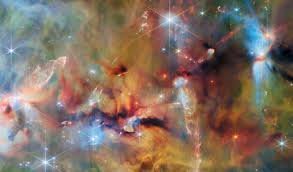
The image, released on June 5, 2026, focuses on a small yet intricate portion of the Orion Molecular Clouds. This region is not just a cloud of gas, but a massive filament of cold dust and gas that extends far beyond the well-known Orion Nebula.
What makes this discovery truly exceptional is the ability of the James Webb Space Telescope to pierce through the cosmic veil, revealing every single stage of stellar evolution in one single frame. Within this scene, which stretches an incredible 150 light-years across, we can observe:
- n
- Stellar Embryos: The very youngest stages of star formation, still nestled within their gaseous cocoons.
- Protoplanetary Discs: Swirling disks of gas and dust that may eventually form new planetary systems.
- Pre-main Sequence Stars: Newly-minted stars that are just beginning their long journey of nuclear fusion.
Why This Matters for Science
By capturing these details, the JWST allows astronomers to study the conditions that led to the birth of our own Sun and Solar System. The precision of the telescope’s infrared sensors transforms our understanding of how gravity collapses cold gas into the brilliant stars that light up the night sky.
This mission reinforces NASA’s commitment to exploring the unknown, innovating for the benefit of all humanity, and inspiring the world through continuous discovery.
Explore More of the Universe
The journey to understand the cosmos is far from over. For those interested in the technical specifications of the telescope or the latest galleries, you can explore the official NASA Webb Telescope portal to see more high-resolution imagery of the deep sky.
Stay tuned as we continue to decode the mysteries of the universe, one photon at a time.