
The Middle East on Edge: A Fragile Peace Under Fire
The geopolitical landscape of the Middle East has reached a critical tipping point. What began as a hopeful breakthrough with a memorandum of understanding (MoU) between the United States and Iran is now facing its first major trial. The primary catalyst? The reignited and violent conflict between Israel and Hezbollah in Lebanon.
While President Trump and Iranian officials have signed an initial agreement aimed at ending hostilities on all fronts, the reality on the ground tells a different story. The tension is so high that crucial diplomatic talks in Switzerland, intended to finalize the nuclear program details, have been indefinitely postponed.
The US-Iran Deal: Ambition vs. Reality
The recently signed agreement calls for a 60-day negotiation period to address Iran’s nuclear program and other contentious regional issues. However, the narrative surrounding the deal remains contradictory:
- The Trump Administration: President Trump has vehemently denied claims of “desperation,” asserting that Iran is the party under pressure. He has insisted that Iran will receive “not ten cents” under the current deal, despite the MoU mentioning a potential $300 billion reconstruction plan.
- The Iranian Regime: While signing the agreement, Iran’s Supreme National Security Council has expressed “complete distrust” in the U.S., warning that any violation of the terms would trigger an immediate reciprocal response.
Hezbollah and Israel: The Lebanon Flashpoint
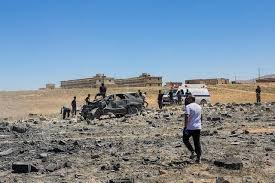
The most immediate threat to this diplomatic effort is the escalating war in southern Lebanon. Although a ceasefire was reportedly brokered, both sides accuse the other of blatant violations.
The Israel Defense Forces (IDF) recently launched a massive operation, striking over 80 Hezbollah targets, including command centers and terrorist infrastructure. Israel maintains that these actions are necessary to eliminate the threat posed by Hezbollah and protect its northern communities. On the other hand, Hezbollah—designated as a terrorist organization by the U.S. and Israel—claims that Israel is committing massacres and destroying civilian infrastructure, vowing to continue its resistance.
Diplomatic Fallout and Regional Impact
The volatility of the situation has led to significant diplomatic delays. Vice President JD Vance, who was scheduled to lead technical talks in Switzerland, has postponed his trip due to “logistical issues” and the instability caused by the fighting in Lebanon.
International observers are calling for urgent intervention. France’s foreign minister, Jean-Noël Barrot, has urged the United States to pressure Israel to halt its operations and has simultaneously called for Hezbollah to begin a disarmament process to ensure the survival of the U.S.-Iran agreement.
What’s Next for the Region?
Despite the chaos, there are signs of cautious economic movement. Maritime tracking data from Reuters and other sources indicate a spike in commercial vessel traffic through the Strait of Hormuz, suggesting that some markets are betting on the success of the peace deal.
However, with Prime Minister Benjamin Netanyahu promising a “heavy price” for Hezbollah and Iran remaining skeptical of American intentions, the path to lasting peace remains fraught with danger. The next few weeks will determine if the US-Iran MoU was a genuine step toward stability or merely a temporary pause in a much larger conflict.



