
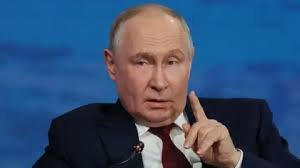
Putin Rejects Zelensky’s Peace Proposal: A Deepening Deadlock in the Russian-Ukraine War
The diplomatic rift between Moscow and Kyiv has widened further following a failed attempt at direct dialogue. In a recent development that underscores the volatility of the Russian-Ukraine war, Russian President Vladimir Putin has explicitly rejected a request for face-to-face negotiations from Ukrainian President Volodymyr Zelensky.
The Clash of Wills: A “Rude” Letter and a Firm “No”
The tension escalated after President Zelensky sent an open letter to Putin, urging direct negotiations to end the conflict that began with Russia’s full-scale invasion in 2022. Zelensky argued that it was “wrong to simply wait” for the international community, particularly the United States, to refocus its attention on the crisis. In his letter, Zelensky called for an immediate ceasefire, though his tone was described as defiant and, at times, mocking.
Responding during Russia’s annual economic forum in St. Petersburg, Vladimir Putin dismissed the proposal, labeling the letter as “rude.” Putin asserted that there was currently “no point” in meeting, suggesting that Zelensky’s overture was perhaps a strategic move to avoid a genuine encounter rather than a sincere effort toward peace.
The Core Disagreement: Territory vs. Sovereignty
The impasse remains rooted in fundamentally opposite goals. While Zelensky seeks a total restoration of Ukrainian sovereignty, Putin maintains that any ceasefire would merely allow Ukraine to regroup its forces without meeting Moscow’s demands.
Russia’s primary conditions for ending the conflict include:
- n
- The complete withdrawal of Ukrainian forces from the Donetsk, Luhansk, Kherson, and Zaporizhzhia regions.
- An official abandonment of Ukraine’s aspirations to join NATO.
- Long-term security agreements rather than short-term ceasefires.
n
n
n
Conversely, Kyiv remains steadfast, refusing to cede any territory. Ukrainian officials argue that granting concessions to Moscow would only embolden Russia to launch future invasions, citing the annexation of Crimea eight years prior to the 2022 invasion as a cautionary tale.
Global Reactions and Mounting Tensions
The prospect of a meeting had briefly sparked hope in international circles. U.S. President Donald Trump noted that a meeting between the two leaders “would be great,” reflecting a desire among some global powers to see a diplomatic resolution. However, Zelensky expressed disappointment on Telegram, stating that Russia is “choosing war again.”
Escalation on the Ground and Sea
While diplomacy falters, military actions continue to intensify. Recent reports indicate a series of strategic strikes and casualties:
- Maritime Conflict: Ukraine claims to have struck five ships in the Sea of Azov involved in the illegal theft of Ukrainian grain and the transport of military supplies.
- Drone Incidents: A Ukrainian drone reportedly exploded in the Romanian port of Constanta, an accident Ukrainian operators attribute to Russian electronic interference.
- Civilian Toll: At least 13 people were killed and 70 injured in recent Russian strikes on Ukraine, including a devastating hit on a dairy factory near Kyiv and a petrol station in Kherson.
As the Russian-Ukraine war continues to evolve, the lack of a diplomatic bridge suggests a prolonged conflict. For further updates on international law and conflict resolution, you can visit the United Nations official portal.
The world remains watchful as both leaders dig in their heels, leaving the hope for a peaceful resolution hanging by a thread.



