Emma Hayes: Transforming World Cup Hydration Breaks into Tactical Masterclasses
The Great Hydration Debate: Commercials or Care?
The FIFA World Cup 2026 has brought more than just world-class football to North America; it has introduced the highly debated “hydration breaks.” While ostensibly designed for player safety, many fans and professionals see them for what they truly are: convenient windows for broadcasters to squeeze in more advertisements.
The sentiment is shared across the pitch. Netherlands captain Virgil van Dijk has openly expressed his distaste for the interruptions, noting that the timing often feels aligned with commercial schedules rather than athlete needs. Even USMNT coach Mauricio Pochettino has weighed in, stating that while these breaks are humane in extreme heat, they are entirely unnecessary in climate-controlled stadiums.
How Emma Hayes is Saving the Viewing Experience
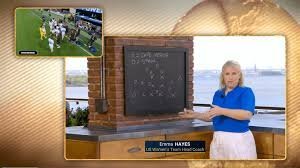
Amidst the frustration, USWNT coach Emma Hayes has found a way to turn a negative into a positive. Working with ITV Sport, Hayes is utilizing these pauses to provide rapid-fire, high-impact tactical breakdowns that add genuine value to the broadcast.
During a recent clash between Spain and tournament debutants Cape Verde, Hayes delivered a 70-second masterclass that outperformed traditional punditry. Instead of mindless filler, she highlighted the nuances of Spain’s wide rotations, explaining exactly how they dismantled a stubborn defence:
- n
- The Pedri-Torres Switch: Hayes demonstrated how Ferran Torres moved from outside to inside, allowing Pedri to shift outward, effectively shaking off Cape Verde’s markers to create a dangerous crossing opportunity.
- The Llorente Burst: She further analyzed a secondary movement where Torres shifted outside, creating a vacuum for Marcos Llorente to cut inside and burst into the penalty area.
Tactical Insight vs. Corporate Greed
Emma Hayes first proved her brilliance as a tactical analyst during the 2021 European Championship. Her ability to distill complex game movements into digestible insights is a rarity in modern sports broadcasting. While many networks prioritize ad revenue, Hayes proves that the “dead air” of a hydration break can be used to educate the audience and deepen their appreciation for the sport.
This stands in stark contrast to the failures of other broadcasters. From FIFA’s untested tournament measures to the cardinal sin of missing live action for a commercial—as seen in previous tournament errors—the fan experience often takes a backseat to monetization.
The Verdict on FIFA’s New Measures
FIFA has a history of experimenting with the game’s flow at the biggest stages. Some changes, like the five-second rule for throw-ins and goal kicks, have successfully reduced time-wasting. However, the hydration breaks remain a polarizing point of contention.
If these breaks are to remain a part of the game, the Emma Hayes model should be the gold standard. By replacing commercials with expert tactical analysis, broadcasters can respect the fans’ intelligence and the game’s integrity.
For those looking for more in-depth coverage and statistical analysis of the tournament, resources like The Athletic continue to provide a comprehensive look at the evolving strategies of the 2026 World Cup.
📰 You May Also Like