
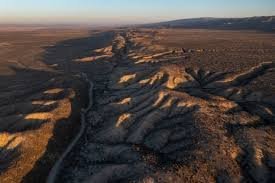
The Ticking Clock: San Andreas and San Jacinto Faults Reach Critical Stress Levels
For residents of Southern California, the phrase “The Big One” has always been a looming shadow. However, recent scientific findings suggest that this geological threat is more than just a possibility—it is a system under extreme pressure. A groundbreaking study has revealed that the San Andreas fault earthquake risks are currently at their highest tectonic stress levels in over 1,000 years.
Researchers describe the current state of the San Andreas and San Jacinto fault systems as being in a “critically loaded state.” This means that the accumulation of energy within the Earth’s crust has reached a tipping point, significantly increasing the probability of a major seismic event in the near future.
The Science Behind the Stress: What is a ‘Critically Loaded State’?
According to Liliane Burkhard, lead author of the study published in the Journal of Geophysical Research: Solid Earth, the stress levels on multiple fault segments are now at or above the highest values seen in the last millennium. This isn’t just a local issue; the region may be capable of a massive, through-going rupture that involves both the San Andreas and San Jacinto systems simultaneously.
To reach these conclusions, scientists at the University of Hawaii at Mānoa utilized advanced computer modeling. By inputting 1,000 years of earthquake history, they simulated stress accumulation and release, uncovering a frightening reality: the system has been building pressure for over 160 years since the last major rupture.
Cajon Pass: The ‘Earthquake Gate’
One of the most intriguing aspects of the research is the role of Cajon Pass. Positioned at the junction of the two major fault systems, Cajon Pass acts as a geological “earthquake gate.” Depending on the alignment of stress levels, this gate can either:
- n
- Block large ruptures from traveling between the two fault systems, limiting the scale of the disaster.
- Facilitate a joint rupture, allowing a massive earthquake to tear through both the San Andreas and San Jacinto faults at once.
Currently, because stress levels are historically high across the entire region, the likelihood of this “gate” opening and allowing a combined rupture is significantly increased.
Why This Matters: Remembering the Impact
While scientists cannot predict the exact date or time of a San Andreas fault earthquake, understanding the risks is vital for urban planning and emergency preparedness. California has a devastating history with seismic activity; the 1994 Northridge earthquake serves as a stark reminder of the potential destruction, having claimed over 60 lives and destroying 87,000 homes and businesses.
How to Stay Prepared
Living in a seismically active zone requires vigilance. To better understand your risk and how to prepare, experts recommend visiting the USGS (United States Geological Survey) for real-time monitoring and safety guidelines.
Key preparation tips include:
- n
- Securing heavy furniture to walls.
- Maintaining an emergency kit with water, food, and medication.
- Establishing a family communication plan.
- Practicing “Drop, Cover, and Hold On” drills.
The Earth is constantly shifting, and while we cannot stop the movement of tectonic plates, knowledge and preparation are our best defenses against the inevitable.



