
A Tale of Two Ceremonies: Sundar Pichai and the Dual Spirit of Stanford
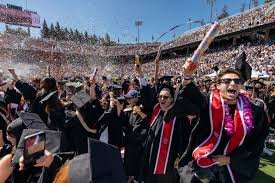
Stanford University’s recent commencement ceremony was more than just a celebration of academic achievement; it was a vivid reflection of the current American zeitgeist. Amidst the sea of cardinal-red sashes, inflatable ducks, and Storm Trooper helmets, two contrasting voices emerged to offer profoundly different visions of success, ethics, and the role of education in the modern world.
Sundar Pichai: The Power of a “Golden” Perspective
Taking the main stage, Sundar Pichai, the CEO of Google, delivered a keynote address rooted in resilience and optimism. For Pichai, Stanford represents the gateway to the technological world—a place where he first experienced the awe of having unlimited access to computers, a stark contrast to his early life in Chennai, India.
One of the most poignant moments of his speech was his reflection on perspective. Recalling his first arrival in California, Pichai expected lush greenery but found a brown landscape. When his host described the scenery as “golden” rather than brown, it sparked a realization: we cannot choose the world we graduate into, but we can choose how we frame our circumstances.
Key Takeaways from Sundar Pichai’s Address:
- Embrace the Difficult: Pichai urged graduates to seek out the hardest projects. He cited his own experience developing the Chrome browser as a pivotal moment of growth.
- Optimism as a Tool: In an era of global conflict and economic anxiety, he argued that optimism attracts other great people and leads to meaningful achievement.
- Resilience Through Generations: He reminded the audience that every generation faces its own unique hardships, encouraging graduates to look beyond the daily news cycle.
The “People’s Commencement”: A Call for Justice
While the formal ceremony focused on dreams and innovation, a separate, student-led “People’s Commencement” offered a somber counter-narrative. This event highlighted the tension between Stanford’s role as a tech engine and its struggle with social justice issues, particularly regarding Gaza and the West Bank.
The most striking voice was that of Mahmoud Khalil, a Columbia University graduate and activist. Khalil’s journey has been a harrowing one, including 104 days in an ICE detention center. His speech served as a stark critique of academic institutions that, in his view, celebrate values of truth and conscience in theory but punish them in practice when students speak out against oppression.
The AI Paradox: Innovation vs. Surveillance
Interestingly, despite being a leader in the artificial intelligence revolution, Sundar Pichai largely avoided the topic of AI during his speech, perhaps mindful of the intense scrutiny AI evangelists currently face. However, the theme of AI lingered in the air—literally. At the alternative ceremony, a banner reading “ICE Spies with Google AI” fluttered in the wind, symbolizing the deep divide between the tech elite’s vision of progress and the activists’ fear of surveillance.
Final Reflections: Education Beyond the Pedigree
The contrast between Pichai’s message of personal optimism and Khalil’s demand for systemic justice highlights the complex environment today’s graduates enter. As Dr. Mohammed Subeh noted during the protest ceremony, a Stanford pedigree does not define a person; rather, they are defined by the clarity and conviction with which they stand up against dehumanization.
Whether following the path of technological ambition championed by Sundar Pichai or the path of social activism advocated by Mahmoud Khalil, one thing is certain: the class of 2025 is entering a world that demands both the courage to innovate and the courage to care.



