
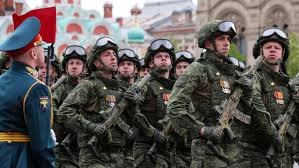
Russia’s Recruitment Crisis: Why Multi-Million Ruble Bonuses Aren’t Enough to Win the War
Imagine being offered a signing bonus of $80,000—more than four times the average annual salary—or the total erasure of $140,000 in debt. For many men in Russia, this isn’t a dream scenario; it is a calculated recruitment pitch from the Kremlin to fuel the ongoing invasion of Ukraine.
From towering roadside billboards to targeted social media ads, the Russian military is attempting to buy loyalty and bravery. However, as the conflict enters its fifth year, a disturbing trend is emerging: the money isn’t working.
The Recruitment Paradox: Cash vs. Casualty
Despite these eye-watering sums, military recruitment plummeted by 20% in the first quarter of this year compared to the previous period. According to experts, Russia is facing a fundamental reality: rubles cannot fight wars.
For the first time in its history, the Russian state is attempting to pay its citizens to fight rather than relying solely on conscription. This shift has revealed deep fissures in the population’s willingness to serve. Potential recruits are deterred by:
- n
- Reports of brutal treatment on the front lines.
- The prevalence of “certain-death” ground missions.
- A growing trend of soldiers bribing officers to avoid the most dangerous assignments.
n
n
n
A Nation at its Breaking Point: The Labor Crisis
The struggle to find soldiers is bleeding into the civilian sector. Russia is currently grappling with the most severe labor shortage in its history. This is not just a military problem; it is a systemic economic failure.
The defense industry is operating at maximum capacity, with factories working around the clock. While this seems like a victory for war production, it has stripped other sectors of essential workers. This scarcity of labor has led to a vicious cycle of wage inflation and economic instability.
“Labor is a scarcer input than physical capital or finance… the state cannot dictate the birth rate,” notes Nigel Gould-Davies of the International Institute for Strategic Studies (IISS).
The Economic Toll on the Ordinary Citizen
While the Kremlin’s war coffers are temporarily boosted by oil prices, the average Russian household is feeling the pinch. The fiscal burden of the war now consumes roughly 9.5% of the total federal budget.
The consequences for the public include:
- n
- Sky-high inflation: Food prices have surged by over 18% since early 2024.
- Infrastructure Decay: Ukrainian strikes on critical infrastructure have caused gasoline shortages and persistent travel delays.
- Tax Hikes: A recent increase in sales tax has further diminished consumer confidence.
n
n
n
Technology vs. Manpower: Ukraine’s Edge
While Russia tries to fill its ranks with former prisoners, North Korean allies, and incentivized immigrants, Ukraine is pivoting toward technological warfare. The Institute for the Study of War (ISW) highlights that Ukrainian forces are out-innovating Russia through the use of tactical drones and robots.
Ukraine has successfully conducted thousands of unmanned ground missions, allowing them to inflict heavy casualties on Russian forces while minimizing their own troop losses. This creates a mathematical nightmare for the Kremlin: they are losing soldiers faster than they can recruit them, regardless of the bonus offered.
The Final Crossroads for Putin
President Vladimir Putin now faces a critical choice. To sustain the invasion, he may be forced to implement a second, highly unpopular forced mobilization or severely restrict the movement of men leaving the country.
As the economic strain becomes visible and social discontent grows, the Kremlin must decide: radically escalate the demands on Russian society or scale back its war aims. In a war of attrition, the side that runs out of people first loses—and for Russia, the human cost is becoming an unbearable price to pay.



