
US-Cuba Tensions Escalate: Are Sanctions a Pretext for Military Action?
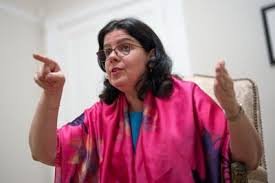
The diplomatic relationship between the United States and Cuba has reached a critical boiling point. In a revealing interview, Lianys Torres Rivera, Cuba’s top diplomat to the U.S., has warned that recent aggressive measures taken by the Trump administration are not merely legal or economic tools, but rather a “pretext” to pave the way for a potential military intervention.
According to Torres Rivera, the current strategy employed by Washington is designed to manipulate American public perception, framing Cuba as a security threat to justify force. She describes the current state of affairs as a “war without bombs,” where economic coercion is used to destabilize the island.
The Legal Battle: The Indictment of Raúl Castro
One of the most provocative moves by the U.S. government is the indictment of former President Raúl Castro. Now 95 years old, Castro faces conspiracy and murder charges stemming from the 1996 shootdown of two unarmed civilian planes operated by the Brothers to the Rescue group.
- Cuba’s Stance: The Cuban government views Raúl Castro as a “sacred symbol of the revolution” and has vowed to defend him and the nation until the end.
- The U.S. Stance: Federal authorities maintain that the legal proceedings are a matter of justice for the lives lost in 1996.
Economic Collapse and the Human Cost
Beyond the legal battles, Cuba is grappling with a severe humanitarian crisis. The U.S. has implemented a stringent energy blockade, choking off vital fuel shipments to the island. This has resulted in a devastating ripple effect across Cuban society:
- Severe Blackouts: Many citizens are enduring power outages of up to 20 hours a day.
- Hyperinflation: The cost of gasoline, kerosene, and basic food items has skyrocketed.
- Medical Shortages: Access to essential medicines has become increasingly difficult for ordinary Cubans.
While the U.S. Treasury Department has leveled sanctions against President Miguel Díaz-Canel and other leaders, the Trump administration argues that Cuba’s economic misery is a direct result of its own socialist policies rather than external pressure.
Geopolitical Stakes: China, Russia, and the “Vietnam Model”
The conflict is not just bilateral; it is deeply entwined with global geopolitics. U.S. Secretary of State Marco Rubio has highlighted Cuba’s intelligence and security ties with China and Russia as a primary national security threat to the United States.
In contrast, Torres Rivera points to the relationship between Washington and Hanoi as a blueprint for peace. She argues that Vietnam achieved stability and positive relations with the U.S. by enacting reforms at its own pace, without foreign coercion. Cuba, she insists, is open to change, but only if those reforms are generated internally.
Conclusion: A Fragile Peace
With the U.S. administration refusing to rule out military action and Cuba preparing for “fierce resistance,” the region remains on edge. Whether diplomacy can prevail or if the “war without bombs” will escalate into a physical conflict remains the central question of Caribbean geopolitics today.
For more detailed analysis on international sanctions and diplomatic protocols, you can visit the United Nations official portal or follow the latest updates from the Associated Press.



