
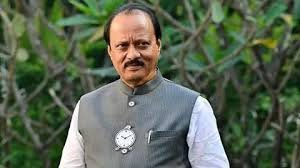
#ajitpawar: The Legacy of Maharashtra’s Pragmatic Politician
The sudden passing of Ajit Pawar, Deputy Chief Minister of Maharashtra, has created a significant void in Indian politics. His death on Wednesday, alongside four others in a plane crash, marks the end of an era for a politician who navigated the complex landscape of Maharashtra with a unique blend of pragmatism and shrewdness. For decades, Pawar rose through the ranks, but his journey was deeply intertwined with his uncle, Sharad Pawar, the founder of the Nationalist Congress Party (NCP), and a towering figure in Indian politics.
From Baramati to the Forefront
Born in 1959, Ajit Pawar entered politics in the 1980s, mentored by his uncle. He quickly established a strong base in Baramati, a rural area in western Maharashtra, leveraging the influence of sugar cooperatives, banks, and local institutions to build both economic power and political loyalty. He was widely seen as Sharad Pawar’s heir apparent, yet he was determined to carve his own path.
A Divergent Style
While Sharad Pawar was known for his patient, strategic approach and coalition-building skills, Ajit Pawar adopted a more direct and practical style. He focused on regional power, governance, and control over local political networks. This difference in approach, coupled with his often-mercurial personality, garnered him both fervent supporters and staunch critics. Despite his rapid ascent within the NCP, Ajit Pawar often felt constrained, operating as a lieutenant rather than a leader, with key decisions still resting with his uncle.
The 2019 Rift and Beyond
Years of simmering tension culminated in a dramatic turn in 2019 when Ajit Pawar briefly aligned with the Bharatiya Janata Party (BJP), forming a government and claiming the deputy chief minister’s post. This attempt at independence was short-lived, as Sharad Pawar intervened to reclaim control of the party and facilitate the formation of a different coalition. However, the public rift exposed deep divisions within the Pawar family.
The fracture deepened in 2023 when Ajit Pawar once again broke away from his uncle’s NCP, joining a governing coalition led by the BJP and reclaiming the deputy chief minister’s position. This time, he successfully split the party, securing the NCP name and electoral symbol for his faction. The once-unified Pawar name fractured into two rival camps, with family gatherings becoming rare and public appearances largely separate.
A Legacy of Division and Adaptation
Supporters hailed Ajit Pawar’s defection as a courageous move, reflecting his adaptability in India’s dynamic political system. Critics, however, viewed it as opportunistic. The rupture became a defining political drama in Maharashtra, reshaping its political fault lines. Recent civic election results in Pune and Mumbai sparked speculation about a potential reconciliation between the two NCP factions, with some suggesting Ajit Pawar might even lead a united party. His untimely death has abruptly ended those possibilities.
Now, questions arise about the future of the lawmakers who followed Ajit Pawar, their allegiance to his cousin, Supriya Sule (Sharad Pawar’s daughter), or other family members. The stability of the alliances he forged is also uncertain. Ajit Pawar leaves behind a divided legacy – a stark reminder of how personal ambition and familial ties can profoundly shape the course of politics.
Further Reading: For more insights into Indian politics, explore BBC News India.
Additional reporting by Nilesh Dhotre from BBC Marathi



