
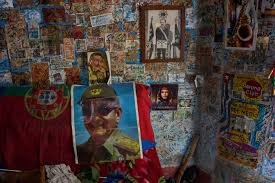
Raúl Castro at 95: The Enduring Legacy of a Cuban Revolutionary
On Wednesday, Raúl Castro reached a historic milestone, celebrating his 95th birthday. For many, his name is inextricably linked to the 1959 revolution, but for those who have followed Cuban politics for decades, Raúl represents a distinct and complex chapter in the history of one of the world’s last remaining communist states.
While he officially stepped away from the presidency in 2018 and retired from formal politics in April 2021, the “hero of the Republic of Cuba” remains a formidable figure, continuing to influence the nation’s trajectory from the shadows.
The Rise of a Revolutionary
Born on June 3, 1931, in Birán, Raúl Castro’s journey into political activism began early. While studying law in Havana, he became a fierce opponent of the Fulgencio Batista dictatorship. His commitment to the cause was cemented in 1953 during the failed attack on the military barracks in Santiago de Cuba.
After a period of exile in Mexico, Raúl joined the guerrilla forces that eventually succeeded in unseating Batista in 1959. Following the victory, he was appointed minister of the Revolutionary Armed Forces, overseeing critical military operations across Africa and Latin America—moves that would define his relationship with the United States for decades.
Stepping Out of Fidel’s Shadow
For years, Raúl was seen as the loyal lieutenant to his brother, Fidel Castro. However, when Fidel’s health declined in 2006, Raúl took the helm, officially becoming president in 2008. During his 12-year tenure, Raúl proved to be a pragmatist.
Key shifts during Raúl Castro’s presidency included:
- n
- Economic Liberalization: He allowed limited private enterprise to operate, recognizing the need for economic modernization.
- Diplomatic Thaw: He navigated the historic restoration of diplomatic relations with the U.S. in 2015 under President Barack Obama.
- Debt Relief: He successfully negotiated with Russia to cancel approximately 90% of Cuba’s Soviet-era multibillion-dollar debt.
Current Tensions and the U.S. Indictment
Despite his retirement, Raúl Castro is far from irrelevant. He still holds a seat in the National Assembly and maintains his rank as a general in the Revolutionary Armed Forces. However, his twilight years have been marked by renewed legal conflict with the U.S. government.
Recently, the U.S. government indicted Raúl Castro in connection with the 1996 downing of civilian planes flown by Miami-based exiles. The charges, which include murder and the destruction of an aircraft, have sparked condemnation from the Cuban government, while Castro himself has remained silent on the matter.
A Symbol of Cuban Identity
To his supporters, Raúl Castro is more than a politician; he is a symbol of Cuban dignity and freedom. Social media has recently been flooded with the hashtag #Raúles, reflecting a deep-seated loyalty among many Cubans who view him as the architect of their national identity.
As Cuba continues to navigate a precarious political and economic landscape under the leadership of Miguel Díaz-Canel, the presence of Raúl Castro—dressed in his signature olive green military garb—serves as a constant reminder of the revolution’s origins and its enduring, if contested, legacy.
For more updates on international relations and Caribbean politics, you can follow the latest reports from AP News Latin America.



