
The Atlantic’s Warning: Is the AMOC Slowing Down? Understanding the ‘Cold Blob’ Mystery
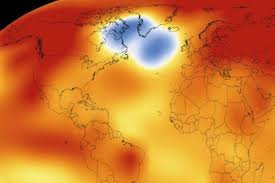
While the vast majority of our planet is heating up at an alarming rate, there is one mysterious exception. South-east of Greenland, a specific patch of the North Atlantic is actually cooling. Known to scientists as the “warming hole” or the “cold blob,” this anomaly is more than just a geographic curiosity—it may be a critical warning sign for the health of our global climate system.
What exactly is the AMOC?
To understand the cold blob, we first need to understand the AMOC (Atlantic Meridional Overturning Circulation). Think of the AMOC as a massive ocean conveyor belt. It carries warm, salty water from the tropics and the Gulf of Mexico toward the North Atlantic.
Once it reaches the north, the water cools, becomes denser, and sinks to the ocean floor, flowing back south. This process is vital because it distributes heat across the globe, keeping Europe significantly warmer than it would otherwise be.
The Mystery of the Cold Blob: Atmosphere vs. Ocean
For years, scientists have debated why this specific region near Greenland is cooling while the rest of the world burns. There are two primary theories:
- n
- The Atmospheric Theory: Some researchers argue that rapid Arctic warming has shifted the jet stream. This shift increases evaporation and cloud cover, effectively “shading” the ocean and pulling heat away from the surface.
- The Ocean Circulation Theory: Other experts, including Stefan Rahmstorf from the Potsdam Institute for Climate Impact Research, argue that the AMOC is weakening. As Greenland’s ice sheets melt, a surge of freshwater dilutes the saltiness of the ocean, making the water less dense and preventing it from sinking. This slows the entire conveyor belt, meaning less warm water reaches the north.
Why a Slowing AMOC is a Global Emergency
If the AMOC continues to weaken or reaches a “tipping point,” the consequences would be catastrophic and far-reaching. We aren’t just talking about a slightly chillier winter in London; we are looking at systemic climate disruption:
- European Deep Freeze: A full collapse could lead to a dramatic drop in temperatures across Western Europe.
- Agricultural Failure: The shift in ocean currents could disrupt monsoon rains in Africa and Asia, threatening food security for billions of people.
- Sea Level Rise: A slowing circulation can lead to faster sea-level rise along the North American coastline.
The Verdict: Is the Collapse Imminent?
The challenge for scientists is the lack of long-term data. We only have about 22 years of direct observations of the AMOC’s strength. While recent studies using NASA data and climate reanalyses suggest the cooling is happening deep in the ocean (up to 1,000 meters down)—pointing strongly toward an ocean-driven cause—some experts remain cautious.
Whether the cold blob is caused by the wind or the water, it serves as a stark reminder that our oceans are reaching a breaking point. The subpolar gyre, a massive swirl of currents that feeds the AMOC, could hit its tipping point as early as the 2040s, accelerating the climate shift.
The takeaway is clear: the “cold blob” is not just a patch of chilly water; it is a symptom of a planetary system in distress.



