More Than Just Fabric: The Emotional Legacy of FIFA World Cup Kits
For many, a lifetime can be measured in FIFA World Cup cycles. Every four years, the world pauses, and a new chapter of footballing history is written. While we remember the goals, the trophies, and the heartbreaking losses, there is another element that captures the essence of these moments: the jersey.
A football shirt is more than a uniform; it is a symbol of national identity and a vessel for memory. From the baggy designs of the ’90s to the sleek, high-tech fabrics of today, certain kits transcend the game to become timeless masterpieces.
What Makes a Kit Truly Iconic?
According to renowned designer Matthew Wolff—the mastermind behind the celebrated Nigeria 2018 outfits—the magic of a kit often lies in the intersection of performance and nostalgia. For many, the jerseys of the 1990s and early 2000s felt “magical,” transforming players into superheroes in the eyes of young fans.
However, achieving “iconic” status is harder today. In a saturated global market where clubs and nations release multiple versions per season, the sheer volume of product can dilute the impact of a single design. The challenge now is balancing genuine cultural expression against rapid consumerism.
The Hall of Fame: Most Legendary FIFA World Cup Jerseys
To celebrate the beauty of the game, we’ve curated a list of the most influential kits in the history of the FIFA World Cup. Here are the designs that changed everything:
1. West Germany (1990) – The Design Revolution
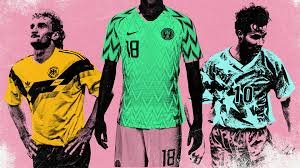
Widely considered the gold standard of kit design, the 1990 West Germany shirt broke the mold. Designed by Ina Franzmann, it introduced an expressive, colorful geometric pattern that departed from the plain shirts of the era. It wasn’t just a winning team; it was a visual revolution that still inspires collectors today.
2. Brazil (1970) – The Golden Standard
Canary yellow. One color, one nation, one identity. The 1970 Brazil kit is perhaps the most recognizable in sports history. Worn by legends like Pelé and Jairzinho, this simple yet vibrant design perfectly mirrored the breathtaking football played at the Azteca Stadium.
3. Nigeria (2018) – A Cultural Phenomenon
The 2018 Nigeria kit proved that a jersey could be a fashion statement. By blending traditional Nigerian aesthetics with modern sportswear, Nike created a phenomenon that resonated far beyond the pitch, selling out instantly in stores worldwide. It was a masterclass in aligning sports with global cultural movements.
4. Argentina (1986) – The Story of the “Knock-offs”
The story behind Argentina’s 1986 kit is as legendary as Diego Maradona’s “Hand of God.” Facing a clash with England’s white shirts and hating their official blue alternative, the team reportedly sourced jerseys from the Tepito market in Mexico City. Maradona himself approved the design, claiming, “With this one, we will beat the English.”
5. USA (1994) – Bold and Brash
The 1994 US kit was an unapologetic embrace of American boldness. Featuring oversized stars on a stone-washed aesthetic, it was initially feared by the players as being “too much.” Yet, it became a beloved symbol of the tournament’s arrival in North America.
Honorable Mentions: Rebellion and Rule-Breaking
- n
- The Netherlands (1974): Johan Cruyff’s rebellion. Because of a contract with Puma, Cruyff wore a shirt with only two stripes, while his teammates wore Adidas’ three, embodying his spirit of individuality.
- Cameroon (2002): The forbidden sleeveless kit. While banned by FIFA for the actual tournament, the sleeveless look became a cult classic, even inspiring outfits in the world of tennis.
- England (1966): The red jersey that represents the Three Lions’ only World Cup triumph—a timeless piece of English sporting folklore.
Conclusion: The Eternal Thread of Football
Whether it is the bold checks of Croatia in 1998 or the effortless cool of France in 1982, FIFA World Cup kits serve as a visual timeline of our passion for the sport. They remind us that while players retire and stadiums change, the colors we cheer for remain eternal.
What is your all-time favorite World Cup jersey? Let us know in the comments below!