
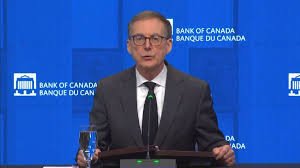
Understanding the Bank of Canada’s Latest Financial Stability Outlook
The Bank of Canada has released its annual Financial Stability Report, providing a critical health check on the nation’s financial resilience. While the overall system has remained functional throughout a challenging year, the central bank warns that the economic landscape is becoming increasingly “volatile,” with vulnerabilities that could leave Canada exposed to significant shocks.
According to Senior Deputy Governor Carolyn Rogers and Deputy Governor Toni Gravelle, the primary concern is not a single failure, but the potential for multiple risks to “crystallize” simultaneously, creating a reinforcing cycle of economic instability.
Global Uncertainties and Geopolitical Pressures
The report highlights several external factors that could disrupt the Canadian economy:
- Middle East Conflict: Ongoing tensions have jeopardized the global supply of essential commodities, including oil, natural gas, and fertilizers, leading to heightened market volatility.
- Trade Relations: The review of the CUSMA (Canada-United States-Mexico Agreement) remains a focal point, as trade disputes and potential tariffs continue to pose risks to bilateral commerce.
- The AI Paradox: While Artificial Intelligence is expected to drive long-term productivity and growth, the Bank warns of immediate disruptions in specific job sectors and an increase in the sophistication of cyber-attacks.
The Domestic Struggle: Household Debt and Wealth Inequality
One of the most pressing internal concerns is the level of household debt. Deputy Governor Toni Gravelle noted that while overall household wealth has risen, this figure masks a troubling divide.
“Some households face far greater strain than others, and those with the highest debt burden have very little financial flexibility to cope with a job loss or an unexpected expense,” Gravelle stated.
This economic gap means that while high-income earners may navigate mortgage renewals with ease, lower-income families are feeling the brunt of the rising cost of living. This wealth inequality creates a fragmented financial reality where the “average” data does not reflect the true struggle of many Canadians.
The Data Gap: Small Businesses and Emotional Stress
A striking admission in the report is the limitation of the data analyzed. Senior Deputy Governor Carolyn Rogers acknowledged that corporate-level data often overshadows the plight of small businesses, which may be struggling with insolvency while larger corporations report growth.
Furthermore, the Bank emphasized that statistical indicators cannot measure the psychological toll of financial instability. Even when data suggests improvement, many Canadians continue to feel significant stress due to the cumulative economic pressures of recent years.
Final Thoughts on Canada’s Financial Resilience
Canada’s financial system is currently stable, but it is operating in a high-risk environment. The combination of geopolitical instability, high debt levels, and technological disruption requires a cautious approach to fiscal management. For more detailed insights, citizens and investors are encouraged to monitor official updates from the Bank of Canada.



