
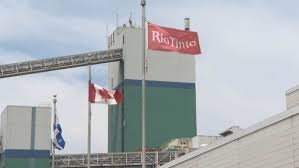
The Struggle for Financial Security: Rio Tinto Alcan Retirees Sound the Alarm
For many, retirement is supposed to be a period of stability and peace. However, for thousands of retired executives from Alcan and Rio Tinto, the reality is far from serene. Despite the pension fund technically remaining in surplus, a growing number of retirees are expressing deep concern over the future of their pension funds (fonds de pension) and their ability to maintain a decent standard of living.
The association ActiPension, representing 6,475 retirees, is leading the charge, arguing that current investment returns are simply not enough to protect the purchasing power of those who spent their careers building the company’s success.
The Erosion of Purchasing Power
The most alarming aspect of this crisis is the lack of inflation indexing. According to Jean Brousseau, President of ActiPension, the failure to adjust pensions to keep pace with the cost of living has had a devastating effect:
- n
- Retirees from 2011: Have seen a loss of approximately 20% of their purchasing power.
- Retirees from 2000: Have suffered a staggering decline of 26.1%.
This decline is exacerbated by a decade of stagnation; between 2012 and 2022, these retirees received absolutely no indexation, leaving them vulnerable to the rapid inflation spikes seen in recent years.
A Strategy Too Cautious for Current Realities
Why are the returns so low? ActiPension points to a flawed investment strategy. While the benchmark index reached 4.7%, the pension fund only yielded 3.5% since the start of the year.
The core of the issue lies in the portfolio composition: approximately 75% of assets are invested in bonds. While bonds are traditionally seen as safe, in a high-inflation environment, this overly cautious approach can actually be risky, as it fails to generate the growth needed to offset rising prices.
“We want a portfolio that is slightly more aggressive but still sustainable, ensuring that the last retiree in 30 or 40 years still receives their check, while allowing current retirees to stop losing ground to inflation,” explains M. Brousseau.
Corporate Dividends vs. Retiree Needs
The frustration among retirees is compounded by the contrast between their struggle and the company’s corporate generosity. During the ten-year period where no indexation was provided to retirees, Rio Tinto paid out a massive $60.5 billion in dividends to its shareholders.
With Rio Tinto reporting $16 billion USD in revenue last year, ActiPension is questioning why a “catch-up” payment or a more generous indexation policy cannot be implemented to support those who are now over 80 years old and living on smaller, outdated salaries.
What Happens Next?
Rio Tinto recently commissioned the firm Normandin Beaudry to review its investment policy, but the resulting recommendations have not satisfied the retirees. The focus remains on whether the company will prioritize its former employees over cautious accounting.
The turning point will come on June 15th, during the annual general meeting of the Rio Tinto Alcan pension plan. This meeting will determine if an inflation-equivalent indexation will finally be granted.
For those interested in understanding more about how public and private pensions work in Canada, it is crucial to stay informed about portfolio diversification and inflation hedging to ensure long-term financial health.



